Category: Uncategorized

  • Why Lublin Should Be Your Next European Cultural Break

    There is a particular moment in Lublin when the city seems to reveal what makes it different.

    It might happen late in the afternoon, when the light settles over the red roofs of the Old Town and the towers begin to catch the sun. Or while walking down Grodzka Street, where the medieval city opens unexpectedly toward Lublin Castle. Perhaps it comes over a coffee in one of the Old Town’s small cafés, when you realise that the city you thought you were visiting for a weekend has become something more complicated—and more interesting.

    Lublin does not announce itself with the confidence of Prague, Kraków or Budapest. It is not trying to overwhelm you with monuments. Instead, it rewards curiosity.

    This is a city of layers: medieval and modern, Polish and European, Catholic and Jewish, eastern and western, historic and experimental. And now there is another reason to pay attention. Lublin has been named European Capital of Culture 2029, giving the city an unusual momentum several years before its official year in the spotlight. Its programme is built around the idea of “RE:UNION”—a concept of reconnecting communities, cultures and histories.

    For travellers, that makes Lublin particularly compelling now: not as a city waiting for its big moment, but as one already in the process of changing.

    Start in the Old Town—but don’t stop there

    Lublin’s Old Town is the obvious place to begin, and fortunately, it is one of those obvious choices that lives up to the reputation.

    The historic centre is compact enough to explore on foot, its streets bending around Renaissance façades, churches, courtyards and fragments of the city’s medieval past. The architecture reflects centuries of change, with Gothic, Renaissance, Baroque and later influences sharing the same streetscape.

    The most atmospheric approach is perhaps through the Grodzka Gate, once a passage between the Christian and Jewish parts of the city. Today, the gate is home to the Grodzka Gate–NN Theatre Centre, an institution devoted in part to preserving the memory of Lublin’s vanished Jewish community.

    From there, wander without too much of a plan.

    Lublin is particularly good at rewarding the traveller who takes the wrong turn.

    Climb toward the Castle. Look back from Po Farze Square. Find the narrow lanes around Jezuicka Street. Eventually, climb the Trinitarian Tower, where 207 steps lead to one of the city’s best panoramas. From above, the Old Town appears less like a collection of attractions than a living architectural landscape.

    And that is perhaps the first secret of Lublin: the city is more enjoyable when experienced at walking pace.

    A chapel that changes the story

    Inside Lublin Castle is one of the city’s great surprises: the Chapel of the Holy Trinity.

    Its significance is not simply architectural. The walls are covered with 15th-century Russo-Byzantine frescoes, an extraordinary visual encounter between eastern and western Christian traditions. The chapel is also part of the historical landscape surrounding the 1569 Union of Lublin, when representatives of the Polish and Lithuanian political worlds came together in what would become the Polish-Lithuanian Commonwealth.

    That history gives Lublin an identity that is difficult to reduce to a single national story.

    For centuries, the city occupied a frontier position between different political, religious and cultural worlds. Today, that geography feels less like a footnote and more like the key to understanding the place.

    Lublin’s bid for European Capital of Culture explicitly embraced that role, presenting the city as a meeting point between East and West and placing dialogue, solidarity and cultural exchange at the centre of its programme.

    The city that remembers what disappeared

    Lublin’s beauty can make it tempting to treat the city as a picturesque European weekend destination. But doing so would miss one of its most important dimensions.

    Before the Second World War, Lublin had a large and influential Jewish population. The physical traces of that world are now fragmentary, but its memory remains woven into the city.

    The Grodzka Gate–NN Theatre Centre is one of the most significant places to begin exploring this history. Its work includes documenting the pre-war Jewish quarter and preserving stories of a community that was largely destroyed during the Holocaust.

    For visitors, this changes the experience of the Old Town. A doorway, street or empty space can acquire another meaning when you understand what stood there before.

    The State Museum at Majdanek, on the outskirts of Lublin, provides a much more difficult encounter with the city’s wartime history. It occupies the site of the former Nazi concentration and extermination camp known as KL Lublin.

    It is not an excursion to make casually. But for travellers interested in European history, it is an essential part of understanding Lublin—and the twentieth century.

    The city does not offer a polished version of its past. Its cultural institutions increasingly ask visitors to sit with the contradictions.

    That makes the experience more meaningful.

    Lublin’s cultural scene is not trapped in the past

    The most persuasive reason to visit Lublin now, however, may be what is happening beyond the monuments.

    The Centre for the Meeting of Cultures is emblematic of the city’s contemporary cultural ambition. The building itself carries a remarkable story: it incorporates part of an abandoned theatre project begun in the 1970s, turning a symbol of an unfinished past into a major contemporary cultural centre. It includes performance spaces, workshops and a rooftop garden with a viewing terrace.

    Then there are the festivals.

    In summer, Lublin can become unexpectedly theatrical. The Night of Culture turns parts of the city into an open-air gallery, while Carnaval Sztukmistrzów brings acrobats, street performers, jugglers and contemporary circus into public spaces. The Jagiellonian Fair draws on the traditions of historic markets, combining folk culture, crafts, music and food.

    The effect is important.

    Culture here does not always happen behind the doors of a museum or concert hall. It spills into streets and squares.

    That makes Lublin feel less like a city where you consume culture and more like one where you happen to encounter it.

    Come hungry

    A cultural break in Poland should not be entirely cerebral.

    Lublin’s food scene is closely connected to the wider culinary traditions of eastern Poland, where Polish, Jewish, Ukrainian, Lithuanian and other regional influences have overlapped for centuries.

    Look for local specialities rather than chasing only fashionable restaurants. The city’s food traditions include the famous cebularz lubelski, a flatbread topped with onion and poppy seeds that has become one of Lublin’s signature foods.

    The best approach is to allow meals to punctuate the day.

    Coffee in the morning. Something simple after a museum. A long lunch. A drink as the Old Town begins to empty. Dinner when the streets turn golden.

    Lublin is not a city that demands an aggressive sightseeing schedule.

    It is better when you leave room for dinner.

    Why now?

    There is another reason Lublin deserves a place on the European city-break map: timing.

    In October 2024, the city was officially awarded the title of European Capital of Culture 2029. The programme is being developed around “RE:UNION,” with an emphasis on dialogue, participation, international cooperation and reconnecting communities.

    That means 2029 will undoubtedly bring a larger international spotlight.

    But travellers who wait until then may miss the more interesting period—the years when a city is preparing, experimenting and reshaping itself.

    Lublin has already begun that process. In 2026, for example, its cultural programme included an international seminar exploring how culture can strengthen social resilience and community.

    The European Capital of Culture title is therefore not simply a future marketing slogan. It is becoming part of the city’s present.

    A European city without the usual weekend-city script

    Perhaps the strongest argument for Lublin is also the simplest.

    You can come here without feeling that you have already seen it on a hundred travel lists.

    There is no single monument you are obliged to photograph. No checklist that dictates the correct way to spend 48 hours. Instead, Lublin invites a slower kind of attention.

    You walk through a medieval gate and find a contemporary cultural institution.

    You climb a Renaissance street and encounter a rooftop garden.

    You enter a chapel decorated with Byzantine frescoes and emerge into a city whose history connects Poland with Lithuania and the wider eastern European world.

    You follow the traces of a vanished Jewish community, then find young artists, performers and cultural organisers imagining what Lublin might become next.

    That mixture is the real attraction.

    Lublin is not simply a beautiful Polish city. It is a city thinking about what Europe means when histories overlap, borders shift and cultures meet.

    And as Europe prepares to turn its attention toward Lublin in 2029, there is a strong case for going before everyone else arrives.

    The best time to discover the next cultural capital may be before it becomes one.

  • Fryderyk Chopin’s Music, Life, and Secrets Come Together at His Museum in Warsaw

    There is something unusual about meeting a great composer inside a museum.

    You expect manuscripts, portraits and old musical scores. You expect glass cases and carefully written descriptions. You expect to learn about dates, compositions and famous performances.

    But at the Fryderyk Chopin Museum in Warsaw, the experience can feel much more personal.

    Here, Chopin is not simply the elegant face found on concert programmes and Polish banknotes. He appears as a young man writing letters to his family, as a pianist surrounded by friends, as an artist trying to find his place in Paris, and as a Polish exile who carried memories of Warsaw with him throughout his short life.

    His music is everywhere, but the most fascinating discoveries are sometimes the things that existed before the music reached the concert hall.

    A handwritten page.

    A letter.

    A portrait.

    A personal object.

    A fragment of a composition.

    Something touched by Chopin himself.

    These small pieces of evidence can make the distance between 19th-century Warsaw and the present day suddenly feel much smaller.

    The museum occupies Ostrogski Castle, a historic building on Okólnik Street, and its collections contain thousands of objects connected with Chopin and his world. The origins of the collection go back to the 1930s, when the Fryderyk Chopin Institute began systematically gathering manuscripts, letters, books, music, photographs and other memorabilia. Remarkably, some of the most valuable manuscripts were protected from destruction during the Second World War.

    For anyone visiting Warsaw, it is one of those museums where the story begins before you enter the first exhibition room.

    Because Warsaw was not simply the place where Chopin was born.

    It was the city that made him.

    Chopin’s Warsaw

    Fryderyk Chopin was born in 1810 in Żelazowa Wola, but Warsaw was the city of his childhood, education and early artistic development.

    This distinction matters.

    Chopin’s identity was shaped by the world around him. He grew up in a culturally active family, studied music in Warsaw and developed within the city’s intellectual and musical circles. As a young composer, he was already connected to the institutions and people that were helping shape musical life in the Polish capital.

    The museum therefore tells a story that is inseparable from Warsaw itself.

    When Chopin was a child, Warsaw was not the enormous modern capital visitors know today. It was a city within the Russian-controlled Congress Kingdom of Poland, a place where Polish national identity existed alongside political restrictions and foreign influence.

    Chopin absorbed this complicated environment.

    He also absorbed Polish music.

    The rhythms of the mazurka and polonaise would eventually become some of the most recognisable elements of his artistic language. His music travelled far beyond Poland, but something of the country remained inside it.

    That is why Chopin has always occupied such a special place in Polish culture.

    He became an international composer without ceasing to be understood as a profoundly Polish one.

    The child who already seemed different

    One of the most fascinating aspects of Chopin’s story is how early his musical talent became apparent.

    As a child in Warsaw, he was already being recognised as an exceptional pianist. His abilities developed rapidly, and his family and teachers understood that they were dealing with something unusual.

    But the museum helps visitors move beyond the familiar image of the child prodigy.

    The young Chopin was also curious, sociable and deeply connected to the cultural life around him.

    He was not born into some isolated musical world.

    He was part of Warsaw.

    He went to school.

    He made friends.

    He travelled.

    He wrote letters.

    He joked.

    He fell in love.

    He experienced disappointment.

    And he watched the political situation in Poland become increasingly difficult.

    These details matter because they remind us that genius does not erase ordinary human experience.

    The person who eventually wrote some of the most refined piano music in history was once simply a young man trying to understand his place in the world.

    The letters reveal another Chopin

    Perhaps the most intimate objects in the museum are the letters.

    Music can tell you something about an artist’s inner world, but a letter can reveal a completely different person.

    Chopin wrote extensively to family members, friends and acquaintances, and the museum’s collections preserve numerous letters and documents connected with him and the people around him. The collection includes, among other things, letters from his youth and correspondence with people such as his friend Julian Fontana.

    These documents are valuable because they capture Chopin outside the concert hall.

    A famous composition can make an artist seem almost impossibly distant.

    A handwritten letter does the opposite.

    You see the handwriting.

    You see corrections.

    You see the physical evidence of a person sitting somewhere and putting thoughts onto paper.

    Suddenly, Chopin is no longer a name from a music textbook.

    He is someone writing to another human being.

    The secrets hidden in ordinary objects

    One of the pleasures of the museum is discovering that Chopin’s story is preserved not only through his great works but through objects that seem surprisingly ordinary.

    A watch.

    A book.

    A photograph.

    A personal memento.

    A piece of furniture.

    These objects can be more emotionally powerful than a grand portrait because they were part of everyday life.

    The museum’s collection includes a gold watch that the young Chopin received from the celebrated Italian singer Angelica Catalani in 1820, when he was still a child. It also contains a book bearing Chopin’s signature, given to him by his godfather Fryderyk Skarbek in 1823.

    These are tiny details in the enormous story of Chopin.

    Yet they are precisely the details that make history tangible.

    Imagine the boy receiving that watch.

    He was only around ten years old.

    He was already being noticed as a remarkable musician, but nobody yet knew exactly what his future would become.

    The watch belonged to a moment before the legend.

    That is what makes such an object fascinating.

    Warsaw was the beginning

    For Chopin, Warsaw represented home.

    He spent his formative years here, studied at the Warsaw Lyceum and later at the Main School of Music under Józef Elsner. The Polish musical and academic environment of the 1820s played an important role in shaping his development.

    His education was not simply technical.

    Elsner recognised his individuality as a composer rather than trying to force him into a rigid model. Chopin was developing his own musical language, one that drew from European traditions while remaining deeply connected to Polish forms.

    The museum allows visitors to follow that transformation.

    The boy pianist becomes a student.

    The student becomes a composer.

    The composer becomes a performer.

    And eventually, the young man from Warsaw leaves Poland.

    He would never return permanently.

    That departure gives everything that follows a bittersweet quality.

    The journey west

    In 1830, Chopin left Poland.

    He travelled west at a moment of enormous political tension. Soon after his departure, the November Uprising began in Warsaw.

    Chopin was no longer in Poland when the uprising erupted.

    He would remain abroad for the rest of his life.

    Paris became his principal home, and there he entered the sophisticated artistic world of 19th-century Europe. He met musicians, writers, painters and wealthy patrons. His reputation grew rapidly.

    But Poland remained psychologically close.

    This is one of the central themes of Chopin’s story.

    He left Warsaw physically.

    He never really left it emotionally.

    His music became one of the ways he could continue to express a relationship with a homeland he could no longer return to.

    The Polish sound in Chopin’s music

    The mazurkas and polonaises are perhaps the clearest examples.

    These were not simply decorative pieces inspired by Poland.

    They transformed Polish dance forms into sophisticated concert music.

    The polonaise, associated with Polish national culture and aristocratic tradition, became something far more expansive in Chopin’s hands. The mazurka — rooted in traditional Polish dance — was transformed into miniature worlds of extraordinary subtlety.

    That is one reason Chopin’s music became so important to Polish identity.

    He did not simply write music about Poland.

    He carried elements of Polish culture into the international musical world.

    A listener in Paris could hear a Chopin mazurka without ever having visited Poland.

    For a Polish exile, however, the same music could carry memories of home.

    The museum’s manuscripts and annotated musical scores allow visitors to get closer to that process. The collection contains autograph manuscripts, sketches and copies of numerous works, including mazurkas, nocturnes, polonaises, sonatas, waltzes and other compositions.

    Seeing the actual handwriting behind the music changes the experience.

    A printed score looks finished.

    A manuscript shows the process.

    You can see where an idea was written, altered or reconsidered.

    The masterpiece begins to look like work again.

    Chopin and George Sand

    No story about Chopin’s adult life is complete without George Sand.

    The French writer, whose real name was Amantine Lucile Aurore Dupin, became one of the most important relationships of Chopin’s life.

    Their relationship has fascinated biographers for generations, partly because the two personalities were so different.

    Sand was outspoken, unconventional and fiercely independent.

    Chopin was more reserved, delicate and private.

    Together they spent time in France and Majorca, where Chopin’s declining health became increasingly difficult.

    Their relationship eventually ended, but the years they spent together were among the most significant of his adult life.

    The museum’s broader collections preserve correspondence, portraits and memorabilia connected with Sand and the world around Chopin. The Chopin collections include letters from and documents relating to people in his circle, including members of Sand’s family.

    These materials help complicate the familiar romantic story.

    Chopin’s life was not a simple tale of tragic love.

    It was filled with friendships, artistic relationships, family ties and complicated personal loyalties.

    The museum gives visitors a chance to see those relationships through evidence rather than mythology alone.

    The Majorca chapter

    Among the most famous episodes of Chopin’s life is his journey to Majorca with George Sand.

    The couple travelled to the island hoping that the warmer climate would benefit Chopin’s health.

    Instead, the stay became difficult.

    Chopin’s illness, the weather and the conditions of their accommodation created a tense period. Yet he continued composing.

    That contradiction is one of the most striking parts of his biography.

    His body was failing.

    His creative life was not.

    The story of Chopin and Sand in Majorca has become almost legendary, and the Chopin tradition preserves significant material connected with their journey. The Warsaw collections have also been involved in exhibitions exploring their romantic journey to Majorca.

    For visitors, it is a reminder that some of Chopin’s most beautiful music emerged during periods that were far from easy.

    The sound of Chopin’s final years

    Chopin died in Paris in 1849, at only 39 years old.

    The brevity of his life is difficult to comprehend.

    He achieved extraordinary artistic influence in less than four decades.

    His later years were marked by declining health, financial and emotional pressures, and increasing physical weakness. Yet his creative output remained extraordinary.

    The museum’s collections preserve material connected with those final years, including portraits, manuscripts and personal documents.

    One particularly haunting work in the collection is Teofil Kwiatkowski’s painting The Last Moments of Chopin, which depicts Chopin surrounded by people close to him, including his sister Ludwika, his pupil Marcelina Czartoryska, Wojciech Grzymała and Father Aleksander Jełowicki.

    Standing before an image of those final moments changes the way you think about the composer.

    The music becomes personal.

    The piano pieces that can sound almost impossibly elegant were created by a man whose health was deteriorating and whose life was approaching its end.

    The piano that survived

    Among the museum’s most important objects is Chopin’s last piano, which entered the collection through a gift from the National Museum in Warsaw.

    A piano is different from a manuscript.

    A manuscript tells you what Chopin wrote.

    A piano tells you where his hands once worked.

    Of course, visitors cannot recreate the moment when Chopin himself sat before it.

    But the physical object encourages a different kind of imagination.

    The keys are no longer abstract.

    They are part of the instrument through which he translated ideas into sound.

    For a musician, seeing such an object can be deeply moving.

    For someone who knows little about classical music, it can still provide a direct connection to the person behind the compositions.

    What survived the war

    The museum’s history is almost as dramatic as some parts of Chopin’s biography.

    The collections began taking shape in the 1930s, when the Fryderyk Chopin Institute began purchasing manuscripts and other material connected with the composer. The Second World War interrupted the institution’s work, but some of the most valuable manuscripts survived because of the efforts of people who protected them. The institute was reactivated in 1945, and in 1953 the collections were moved to Ostrogski Castle, where the museum remained for decades.

    This means that when you look at a Chopin manuscript in Warsaw today, you are seeing not only a document from the 19th century.

    You are seeing something that survived the destruction of the 20th century.

    That adds another layer of meaning.

    Warsaw itself was devastated during the Second World War.

    Yet Chopin’s manuscripts survived.

    The city was rebuilt.

    The museum continued collecting.

    And the composer remained part of Warsaw’s identity.

    A museum built around a human being

    Perhaps the strongest quality of the Chopin Museum is that it allows visitors to move beyond the monument.

    Chopin is often presented in Poland as a national icon.

    That is understandable.

    He is one of the country’s most famous historical figures.

    But national icons can become distant.

    They become statues.

    Names of airports.

    Names of streets.

    Portraits on banknotes.

    The museum brings the human being back.

    He had a family.

    He had friends.

    He had complicated relationships.

    He travelled.

    He worried about money.

    He wrote letters.

    He missed Poland.

    He became ill.

    He changed his mind.

    He experimented.

    He composed.

    He performed.

    He laughed.

    He suffered.

    He lived.

    And then he died far too young.

    The objects in the museum help reconstruct that person.

    Why Warsaw is the right place to learn his story

    You can study Chopin anywhere.

    You can listen to his music in Tokyo, Paris, New York or London.

    You can read his biography in almost any language.

    But Warsaw gives the story a geographical dimension.

    This is where his childhood unfolded.

    This is where his musical education developed.

    This is where he experienced his first successes.

    This is where he built relationships.

    This is the city he left behind.

    And this is the city that has continued to remember him.

    That connection is visible throughout Warsaw.

    There are Chopin benches.

    Chopin monuments.

    Places associated with his life.

    Concerts.

    And, of course, the museum.

    The composer may have spent much of his adult life in Paris, but Warsaw remains one of the best places to understand where he came from.

    Listen before you visit

    There is one simple way to make a visit to the museum more meaningful.

    Listen to Chopin first.

    You do not need to become a classical-music expert.

    Put on a nocturne.

    Listen to a mazurka.

    Play one of the polonaises.

    Then visit the museum.

    The difference can be remarkable.

    A manuscript is no longer just handwriting.

    A portrait is no longer simply an old face.

    A piano is no longer simply furniture.

    You begin to recognise the music behind the objects.

    You may even find yourself thinking about how a particular melody could have looked on the page before it ever reached the ears of an audience.

    That is when the museum becomes something more than a collection.

    It becomes a bridge between sound and history.

    More than a museum for Chopin lovers

    You do not need to be a devoted fan of classical music to enjoy the museum.

    If you are interested in Warsaw’s history, Polish identity, European Romanticism or simply the life of an extraordinary artist, there is plenty to discover.

    The museum also reveals something about 19th-century Europe more broadly.

    Chopin’s life connected Warsaw and Paris, Poland and France, music and literature, private relationships and public fame.

    His world was international long before the modern idea of international celebrity existed.

    And yet he remained deeply attached to the culture from which he came.

    That tension is perhaps the most interesting part of his story.

    He was a European artist.

    He was also unmistakably Polish.

    He lived abroad.

    He remained emotionally tied to home.

    He became famous across the continent.

    He continued to write music that carried echoes of Poland.

    The secret is in the details

    The most memorable museum experiences are not always the grandest.

    They can be a handwritten letter.

    A tiny signature.

    A watch given to a gifted child.

    A rough musical sketch.

    A portrait showing the people surrounding Chopin at the end of his life.

    These details create a portrait of a person that no single biography can fully capture.

    The museum’s collections are enormous, including manuscripts, printed music with handwritten annotations, letters, portraits, photographs, recordings, memorabilia and other documents. The institution’s own historical records describe thousands of objects gathered over decades from private collectors, families, auctions and cultural institutions.

    Together, they form something close to an archive of Chopin’s world.

    And that is why the museum deserves a place on a Warsaw itinerary even for travellers who would not normally spend their holiday inside a music museum.

    You are not simply learning about a composer.

    You are entering the private world of one of the most famous people Warsaw ever produced.

    Leaving the museum

    When you eventually step back outside onto the streets of Warsaw, the city may look slightly different.

    The modern capital continues around you.

    Cars pass.

    Trams move through the streets.

    People hurry to work.

    Cafés fill with customers.

    The city is busy and contemporary.

    But somewhere underneath all of it is the Warsaw Chopin knew.

    The Warsaw of his childhood.

    The Warsaw where he first performed.

    The Warsaw where he studied.

    The Warsaw he carried with him when he left.

    That city no longer exists exactly as he knew it.

    But the music remains.

    And perhaps that is the greatest secret revealed by the museum.

    Chopin’s life was short.

    His homes changed.

    His relationships ended.

    His body failed him.

    Warsaw itself was devastated and rebuilt.

    Yet the music travelled through all of it.

    It survived in manuscripts.

    It survived in performances.

    It survived in recordings.

    It survived in the memories of the people who knew him.

    And today, it survives every time someone sits down at a piano and plays the first notes of a Chopin piece.

    That is why a visit to the Fryderyk Chopin Museum is not really about looking backwards.

    It is about understanding how something created by one young man from Warsaw managed to outlive almost everything around him.

    The museum preserves the objects.

    Warsaw preserves the memory.

    But the music is still alive.
  • These Are the Most Unusual Museums in Kraków

    Kraków has no shortage of museums. There are palaces filled with paintings, medieval treasures hidden beneath the Main Market Square, grand collections devoted to Polish history and galleries exploring the country’s contemporary art scene. But some of the city’s most fascinating museums are not necessarily the ones you hear about first.

    They occupy old pharmacies, former factories, underground passages, historic workshops and even the grounds of a former airfield. Some tell stories about medicine, others about aviation, Jewish life, glassmaking, technology or the strange details of everyday life. They are the kind of places that can turn an ordinary afternoon in Kraków into something much more memorable.

    This is what makes the city’s museum scene so rewarding. You can spend the morning admiring masterpieces and royal treasures, then, a few hours later, find yourself standing inside an old apothecary surrounded by glass bottles and mysterious instruments, or walking several metres beneath the Main Market Square where medieval Kraków is still visible beneath your feet.

    If you have already seen Kraków’s most famous sights, or simply want to discover a side of the city that feels less predictable, these are some of the museums worth putting on your list.

    The Museum of Pharmacy: Kraków’s Little Alchemist’s World

    On Floriańska Street, one of the busiest streets leading into Kraków’s Old Town, it is easy to walk straight past one of the city’s strangest museums.

    The Museum of Pharmacy of the Jagiellonian University is housed inside a historic townhouse, and stepping inside feels less like entering a conventional museum and more like opening the door to an old alchemist’s laboratory.

    There are glass vessels, ceramic jars, wooden cabinets, old scales, mortars, presses, grinders and pharmaceutical instruments. Some of the rooms have the atmosphere of an apothecary from another century, when medicine, chemistry and herbal knowledge were still closely intertwined and the boundary between a pharmacist and an alchemist could seem surprisingly thin. Kraków’s tourism office describes the collection as extending through five floors of the historic building, from the cellars to the attic.

    It is a wonderful museum for anyone who enjoys places that feel genuinely atmospheric rather than polished and modern.

    The objects are often small, but together they tell a much larger story about how people tried to understand illness and treatment before modern medicine transformed the profession.

    Look closely at the old bottles and you begin to wonder what they once contained. Look at the instruments and you can imagine pharmacists measuring powders and preparing medicines by hand. The building itself becomes part of the exhibition.

    For travellers who love unusual interiors, this may be one of Kraków’s most unexpected discoveries.

    The Stained Glass Museum: Where the Museum Is Still a Workshop

    There are museums where the objects are finished and protected behind glass.

    And then there is Kraków’s Stained Glass Museum, where the tradition itself is still alive.

    This is one of the city’s most unusual cultural experiences because it combines a museum collection with a functioning stained-glass workshop. Rather than simply looking at finished works, visitors can see the environment and techniques associated with the craft.

    The museum is devoted to the history and production of stained glass, and guided tours take visitors through the historic studio and its collections. Current visitor information lists guided tours in English at selected times, making it particularly worthwhile to check the schedule before arriving.

    The experience feels intimate.

    You are not walking through enormous galleries filled with hundreds of objects. Instead, you are entering a working world where colour, glass, light and craftsmanship come together.

    And that changes how you look at stained glass.

    From a distance, a stained-glass window can seem almost effortless: beautiful colours arranged into an image and illuminated by sunlight. Inside the workshop, however, you begin to appreciate how much patience and precision is hidden behind the finished surface.

    For a city famous for medieval churches and historic architecture, this museum offers another way of understanding Kraków’s artistic heritage.

    You are not just looking at the result.

    You are seeing the craft behind it.

    Rynek Underground: A Medieval City Beneath Your Feet

    The Main Market Square is one of the first places most visitors see in Kraków. Cafés surround it, horse-drawn carriages move around its edges and the towers of St Mary’s Basilica rise above the crowds.

    But underneath all that activity is another Kraków.

    Several metres below the square lies the Rynek Underground museum, an archaeological route created following major archaeological research carried out before the underground exhibition opened.

    The experience begins when you descend beneath the familiar surface of the city.

    Suddenly, the noise of the square disappears.

    Instead of modern streets, you encounter archaeological remains, medieval market structures and objects connected with the life of Kraków centuries ago. The museum reconstructs aspects of the medieval marketplace and explains Kraków’s position within the wider European networks of trade and culture.

    It is one of those museums that changes the way you see the city after you leave.

    When you return to the surface and walk across the Main Square, you know that the pavement beneath your feet is only the latest layer.

    There are older streets underneath.

    Older buildings.

    Older stories.

    The museum effectively turns Kraków into a two-level city: the one you can see, and the one hidden below.

    The Eagle Pharmacy: A Museum Inside a Wartime Pharmacy

    Not every unusual museum is unusual because it is entertaining.

    Some are unusual because of the place where the story happened.

    The Eagle Pharmacy, Apteka pod Orłem, stands on Plac Bohaterów Getta in Podgórze, in the rooms of the pharmacy that operated inside the Kraków ghetto during the Second World War.

    The pharmacy was run by Tadeusz Pankiewicz, who chose to remain in the ghetto and helped its inhabitants by providing medicines, passing messages and assisting people during the deportations. He was later recognised as a Righteous Among the Nations.

    Today, the museum remains in the historic pharmacy rooms.

    That is what makes the experience so powerful.

    You are not simply reading about a place that existed somewhere else. You are standing in the actual rooms where the story unfolded.

    Old pharmacy furniture, drawers, vessels, photographs, documents and testimonies create an exhibition that is deliberately intimate. It is not enormous. It does not need to be.

    The small scale makes the history feel closer.

    The Eagle Pharmacy is a museum that should be approached slowly. It is not a place to rush through with a camera while moving towards the next attraction.

    It asks you to stop.

    To read.

    To think about the people who once stood in these rooms.

    And when you leave, the empty chairs of Ghetto Heroes Square outside carry a different weight.

    The Polish Aviation Museum: A Former Airfield Full of Flying Machines

    Kraków’s Polish Aviation Museum could hardly be more different.

    Instead of old manuscripts and delicate objects, there are aircraft.

    Lots of them.

    The museum occupies the grounds of the former Rakowice-Czyżyny airfield, one of Europe’s oldest permanent airfields. Exhibitions spread through historic hangars, modern buildings and outdoor spaces, meaning that visiting feels less like walking through a conventional museum and more like exploring an abandoned world of aviation.

    There are aircraft, helicopters, gliders, engines and machines associated with different periods of aviation history.

    Some of the most interesting exhibits come from the 20th century, including Polish aircraft designs and machines connected with the Cold War era. The collection also includes aircraft engines and historic machines that help explain how aviation developed from an experimental technology into a global industry.

    What makes the museum unusual is the setting.

    You are not simply looking at an aeroplane suspended inside a gallery.

    You are walking across an old airfield.

    The landscape becomes part of the experience.

    For families, it is an especially good choice because the enormous machines provide an immediate visual impact even for visitors who know little about aviation.

    And for anyone who has ever looked up when a plane passes overhead and wondered what it would feel like to stand beside one, this is a surprisingly absorbing place.

    Nowa Huta Underground: A Cold War Kraków Beneath the Surface

    Kraków’s history did not end with the Middle Ages.

    In Nowa Huta, the city tells a very different story — one shaped by post-war Poland, industrialisation and the political world of the communist era.

    The Museum of Kraków operates underground branches in Nowa Huta, including exhibitions beneath residential areas.

    These spaces offer a glimpse into a side of Kraków that is often overlooked by visitors who remain within the Old Town.

    Nowa Huta was planned as a vast industrial district around the steelworks, with broad avenues, monumental architecture and carefully designed residential neighbourhoods. Beneath this world were also spaces associated with civil defence and the fears of the Cold War.

    Walking underground gives you a completely different understanding of the neighbourhood above.

    The Old Town tells you about kings and medieval merchants.

    Nowa Huta tells you about factories, ideology, nuclear fears and the everyday reality of post-war Poland.

    It is a reminder that Kraków is not simply a medieval city preserved in amber.

    It has lived through every turbulent chapter of modern Polish history.

    The Ethnographic Museum: A Journey into Poland’s Folk Traditions

    The Ethnographic Museum is not necessarily strange in the conventional sense, but it is certainly one of the most rewarding places for travellers who want to see a different Poland.

    Located in Kazimierz, in the former town hall on Plac Wolnica, the museum explores Polish folk culture, traditions, interiors, clothing, religious customs and rural life.

    For international visitors, it offers something that the grand museums of Kraków often cannot.

    It takes you away from kings, famous painters and aristocratic families and introduces the world of ordinary people.

    Traditional houses.

    Wooden furniture.

    Costumes.

    Crafts.

    Objects associated with celebrations and everyday work.

    Together, these objects reveal a Poland that existed far beyond the elegant streets of Kraków’s historic centre.

    The museum is particularly fascinating because Polish folk traditions vary significantly from one region to another. What looks like a simple piece of clothing or household decoration can carry information about where people lived, what they believed and how communities marked important moments in life.

    It is a quieter museum than some of Kraków’s headline attractions, but that is precisely why it deserves attention.

    Oskar Schindler’s Factory: A Museum Where the Building Is Part of the Story

    Oskar Schindler’s former enamel factory is now one of Kraków’s most visited museums, but it remains unusual because of the relationship between the building and the history it presents.

    This is not a conventional museum about one famous man.

    Instead, the exhibition uses the history of wartime Kraków to tell a much broader story about life under Nazi occupation, the destruction of the city’s Jewish community and the experiences of ordinary residents.

    The factory itself belonged to Oskar Schindler, whose efforts to protect Jewish workers became internationally famous through Steven Spielberg’s Schindler’s List. But the museum goes far beyond the film.

    The Museum of Kraków lists Oskar Schindler’s Enamel Factory among its major branches, alongside sites such as Rynek Underground, the Eagle Pharmacy and the Old Synagogue.

    What makes a visit particularly memorable is the sense that you are walking through a city rather than simply looking at objects.

    Photographs, documents, reconstructed interiors and personal stories recreate the atmosphere of occupied Kraków.

    It is an emotionally demanding museum, but an important one.

    And it shows why Kraków’s unusual museums are often more interesting than the conventional definition of “museum” suggests.

    They are not always collections.

    Sometimes they are places where history happened.

    The Museum of Photography: Seeing the World Through Old Cameras

    Photography has changed the way humans remember.

    Before smartphones, before digital cameras and before almost everyone carried a camera in their pocket, photography was a complicated and highly technical process.

    Kraków’s Museum of Photography explores that world.

    The museum’s collection and exhibitions offer a journey through the history of photography, cameras and visual culture. For visitors who grew up with digital photography, some of the older equipment can look almost fantastically complicated.

    There is something charming about seeing the enormous cameras and mechanical equipment that once represented cutting-edge technology.

    Today, taking a photograph takes a fraction of a second.

    In the past, making an image could require careful preparation, specialist equipment and considerable technical knowledge.

    The museum helps explain how that technology evolved — and, more importantly, how photography changed the way people recorded their families, cities and historical events.

    It is a museum about technology, but also about memory.

    Every photograph is evidence that someone once stood somewhere and decided that a particular moment was worth preserving.

    A Museum for People Who Think They Don’t Like Museums

    Perhaps that is the best way to think about Kraków’s unusual museums.

    They are not all grand.

    They are not all beautiful.

    They are not all comfortable.

    And they do not all require you to know anything before you arrive.

    Instead, they offer something much more valuable: surprise.

    You may enter a pharmacy expecting a collection of old bottles and leave thinking about the history of medicine.

    You may descend beneath the Main Square expecting an archaeological exhibition and emerge with a completely different understanding of Kraków.

    You may walk into an aviation museum expecting a few planes and find yourself spending hours exploring an entire former airfield.

    You may enter a workshop expecting to look at stained glass and discover how much skill is hidden behind something you normally take for granted.

    That is the pleasure of museums like these.

    They begin with curiosity rather than obligation.

    The Kraków You Don’t See From the Main Square

    The most famous image of Kraków is easy to recognise.

    The Main Market Square.

    St Mary’s Basilica.

    The Cloth Hall.

    Wawel Hill.

    The Vistula.

    But those landmarks reveal only one layer of the city.

    The unusual museums take you elsewhere.

    Below the square.

    Inside a pharmacy.

    Across an old airfield.

    Into a working workshop.

    Under the streets of Nowa Huta.

    Behind the doors of a wartime factory.

    Into the everyday traditions of rural Poland.

    And that is perhaps the best reason to visit them.

    They allow you to stop looking at Kraków as a collection of famous monuments and start understanding it as a living city with layers of history stacked on top of one another.

    Medieval Kraków is there.

    So is royal Kraków.

    Jewish Kraków.

    Industrial Kraków.

    Wartime Kraków.

    Communist Kraków.

    Modern Kraków.

    The museums simply provide the doors between them.

    Which Unusual Museum Should You Visit First?

    If you only have time for one, choose according to the kind of story that interests you.

    For atmosphere, the Museum of Pharmacy is difficult to beat.

    For craftsmanship, the Stained Glass Museum offers something genuinely different from a traditional gallery.

    For medieval history, descend into Rynek Underground.

    For a powerful historical experience, visit the Eagle Pharmacy.

    For something completely different and family-friendly, spend an afternoon at the Polish Aviation Museum.

    For an introduction to Poland beyond the tourist clichés, explore the Ethnographic Museum.

    And if you want to understand the darker history of 20th-century Kraków, Oskar Schindler’s Factory is one of the essential places to visit.

    The beauty of Kraków is that you do not have to choose between the famous and the unusual.

    You can spend the morning walking through the medieval Old Town, have lunch in Kazimierz and then disappear into a museum that almost nobody in your travel group knew existed.

    That is when Kraków becomes especially interesting.

    Because behind the grand façades and postcard views is a city full of strange, intimate and unexpected stories.

    And sometimes the best way to discover them is simply to walk through a door that looks ordinary from the outside.

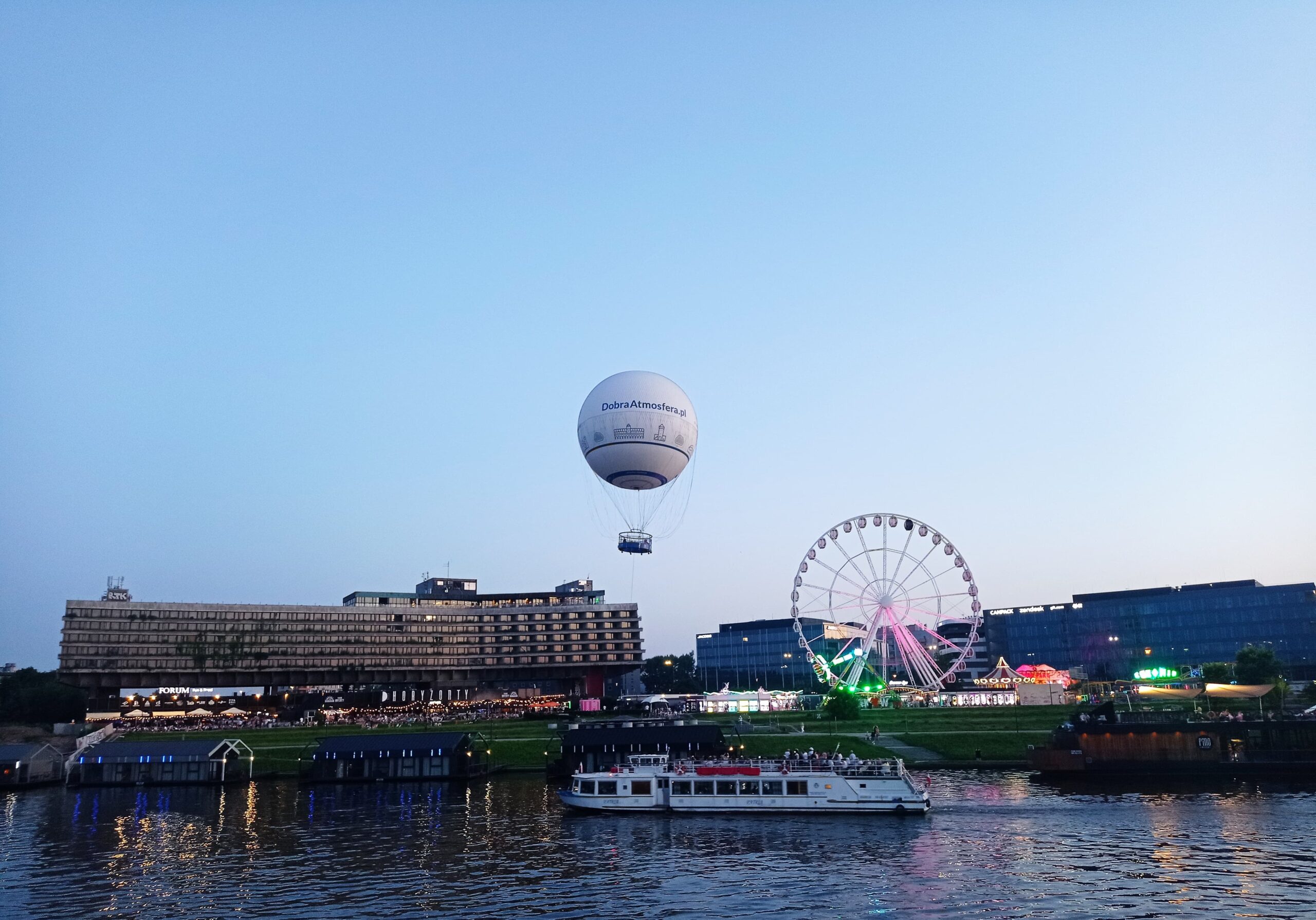
  • Want to See Kraków from the Sky? Try a Hot Air Balloon Ride

    Want to See Kraków from the Sky? Try a Hot Air Balloon Ride

    There is a moment when Kraków looks completely different.

    It happens when the city begins to fall away beneath you.

    The streets become narrow lines. The people moving through the squares become tiny figures. Cars disappear into the distance, and the familiar buildings of the Old Town begin to look almost like a model set carefully beneath the morning sky. Wawel Castle rises from the city like a miniature fortress, the towers of St Mary’s Basilica mark the centre of the historic landscape, and the Vistula bends through Kraków like a silver ribbon.

    Then you realise that you are no longer looking at Kraków from the street.

    You are above it.

    A hot air balloon ride is one of the more unusual ways to experience the city, and for travellers who have already explored Kraków on foot, by bicycle or from the deck of a river boat, it offers something completely different. There is no traffic, no crowded pavement and no glass window between you and the landscape. The basket rises quietly, carried by the wind, giving you time to take in the city from a perspective that most visitors never see.

    And that silence is perhaps the most surprising part.

    Kraków Looks Smaller From Above

    From ground level, Kraków can feel like a large and complicated city. The Old Town leads into Kazimierz, Kazimierz gives way to Podgórze, and beyond the historic centre the urban landscape continues through neighbourhoods that most visitors never have time to explore.

    From a hot air balloon, the relationship between these places becomes much easier to understand.

    The Vistula provides a natural line through the landscape. Wawel sits prominently beside the river, while the dense roofs of the historic centre stretch away from it. Beyond the Old Town, modern neighbourhoods gradually replace the historic architecture, creating a patchwork of old and new Kraków.

    It is the sort of view that makes you pause.

    You may have walked past Wawel Castle several times during your trip. You may have photographed it from the river or stood beneath its walls. But seeing the entire hill, the river and the surrounding city together changes your understanding of the place.

    The castle is no longer simply an attraction.

    It becomes part of Kraków’s landscape.

    The Experience Begins Before You Leave the Ground

    A balloon flight does not begin with a dramatic countdown.

    There is no roar of engines and no sudden acceleration.

    Instead, there is preparation.

    The enormous envelope of the balloon is gradually inflated, spreading across the ground before slowly taking shape. The burners roar intermittently overhead, filling the balloon with hot air and giving the aircraft its lift.

    For many passengers, this is already one of the most memorable parts of the experience.

    A hot air balloon is surprisingly enormous when you stand beside it.

    What initially looks like a colourful piece of fabric lying across a field or launch area gradually becomes a towering structure above you. The basket waits beneath it, and suddenly the reality of what you are about to do becomes clear.

    You are going to fly.

    But not in the way you normally think of flying.

    There is no airport.

    No runway.

    No engine pulling you forward.

    Just heated air, a basket and the wind.

    The Take-Off Is Almost Effortless

    When the balloon finally leaves the ground, the sensation can be surprisingly gentle.

    There is no steep climb.

    No dramatic jolt.

    The basket simply begins to rise.

    For a few seconds, the ground is still close enough to recognise individual details. Then the rooftops become smaller. Trees form patterns. Roads begin to connect into larger shapes.

    The city gradually opens.

    Because the balloon moves relatively slowly, there is time to look.

    That is one of the greatest advantages of this kind of flight.

    From an aeroplane, landscapes disappear beneath you in seconds. From a balloon, the scenery changes at a pace that allows you to study it.

    You can look towards the Old Town.

    Then turn towards the river.

    Then back towards the countryside beyond the city.

    There is no rush.

    Look for Wawel

    If the conditions are right, one of the first things you will want to find is Wawel.

    From above, the royal castle has a completely different presence.

    The buildings appear compact within the larger landscape, but the hill itself becomes particularly clear. You can see how the royal complex occupies its elevated position beside the Vistula and how the surrounding city developed around it.

    Wawel has dominated Kraków’s skyline for centuries.

    Kings lived there.

    Important ceremonies took place there.

    The cathedral became the burial place of Polish monarchs and national figures.

    From street level, all of this history can feel monumental.

    From the air, you can see the geography that helped make Wawel so important.

    The hill stands above the river, offering both visibility and protection, while the city stretches around it.

    It is one of those moments when geography and history suddenly make sense together.

    The Vistula Becomes the Main Character

    From above, the Vistula may be even more impressive than the city’s architecture.

    The river curves through Kraków, separating neighbourhoods while connecting them at the same time. Along its banks, parks and walking paths create long green corridors, while bridges link the two sides of the city.

    From the ground, you notice individual sections.

    From the balloon, you see the whole.

    The river becomes a map.

    It also helps explain why Kraków developed where it did. Cities are rarely placed randomly, and rivers have shaped settlement, trade, defence and transportation for centuries.

    As you float above the landscape, the Vistula provides a reminder that Kraków existed long before its modern roads and buildings.

    The river was here first.

    A Different View of the Old Town

    The historic centre is perhaps the part of Kraków most familiar to visitors.

    Rynek Główny.

    St Mary’s Basilica.

    The Cloth Hall.

    The narrow streets.

    The towers.

    But from above, these famous landmarks lose some of their individual importance and become part of a much larger composition.

    The Old Town’s compact layout becomes visible.

    You can see how the streets radiate around the Main Market Square and how the green belt of Planty surrounds the historic centre.

    Planty is particularly beautiful from above.

    What appears from street level to be a collection of separate parks and tree-lined paths becomes a continuous green ring around the Old Town.

    The medieval city was once surrounded by defensive walls.

    Today, much of that boundary has become one of Kraków’s most pleasant public spaces.

    From the sky, the shape is unmistakable.

    You May See More Than Kraków

    One of the pleasures of a balloon flight is that you do not always know exactly what will appear in the distance.

    Visibility and weather determine how far you can see, but on a clear day the landscape extends well beyond Kraków.

    The hills and countryside surrounding the city begin to reveal themselves, and depending on conditions, distant mountain ranges may become visible.

    This is when Kraków starts to feel less like an isolated destination and more like part of the larger landscape of southern Poland.

    The city sits within Małopolska, a region of forests, farmland, hills, villages and mountain landscapes. From the ground, it is easy to focus entirely on the urban environment.

    From above, the countryside returns to the picture.

    Sunrise Can Make the Experience Even More Special

    If your flight takes place early in the morning, the experience can become particularly atmospheric.

    The light is softer.

    The streets are quieter.

    The city has not yet reached its daytime rhythm.

    Morning mist can sometimes linger over the river or surrounding landscape, depending on the weather, while the first sunlight catches the roofs and towers of the Old Town.

    There is something almost dreamlike about watching a city wake up from a balloon.

    Below you, Kraków begins another ordinary day.

    People walk to work.

    Cars appear on the roads.

    Cafés prepare to open.

    But from your position high above the city, everything seems calm.

    It is one of those travel experiences that does not need much explanation.

    You simply look.

    Is a Hot Air Balloon Ride Safe?

    For anyone considering a balloon flight, safety is naturally one of the first questions.

    Hot air ballooning is an aviation activity and should always be undertaken with a properly licensed and experienced operator using appropriate equipment and procedures. Flights are highly dependent on weather, particularly wind conditions, and pilots may postpone or cancel a flight when conditions are unsuitable.

    That can be frustrating if you have planned the experience around a particular day.

    But it is also part of ballooning.

    The weather decides.

    Unlike a sightseeing bus, a balloon cannot simply follow a fixed route regardless of conditions. The flight depends on the atmosphere, and the pilot needs suitable conditions to operate safely.

    For that reason, it is wise to keep some flexibility in your itinerary if a balloon ride is one of the experiences you particularly want to enjoy.

    What Should You Wear?

    The temptation might be to dress as though you are going on a normal sightseeing flight.

    Think instead about the conditions on the ground.

    Comfortable clothing and sensible shoes are important because the experience may involve walking around the launch and landing areas. You should also be prepared for the possibility of standing in the basket for much of the flight.

    The temperature in the basket is not necessarily dramatically colder than on the ground because the balloon’s burner produces heat above the passengers. Nevertheless, early-morning flights can begin in cool conditions, so layers are a sensible choice.

    And leave the high heels for another evening.

    This is an adventure, not a red-carpet arrival.

    The Landing Is Part of the Adventure

    Eventually, the city begins to rise towards you again.

    The balloon descends gradually, and the landscape that looked distant suddenly becomes detailed once more. Trees become individual trees. Roads become roads. Buildings regain their familiar proportions.

    The landing can be exciting.

    Unlike a commercial aircraft, a balloon does not simply stop at a fixed runway. The pilot chooses a suitable landing area based on the conditions and controls the descent carefully.

    Sometimes the basket touches the ground gently.

    Sometimes there may be a little movement as it settles.

    Either way, passengers often find themselves laughing once it is over.

    There is something satisfying about returning to earth after seeing the city from above.

    You have not simply looked at Kraków.

    For a short time, you have floated above it.

    The Best Part May Be What Happens Afterwards

    One of the nicest things about a balloon flight is what happens when you return to the city.

    Suddenly, familiar places look different.

    You walk past Wawel and remember how small it looked from above.

    You cross the Vistula and understand its curves.

    You walk through Planty and realise that the trees beneath your feet form part of a much larger ring around the Old Town.

    You stand in the Main Market Square and look upwards.

    The city has not changed.

    You have.

    That is what good travel experiences do.

    They give you a new way of seeing somewhere you thought you already understood.

    Is a Hot Air Balloon Ride in Kraków Worth It?

    For travellers who want something beyond Kraków’s traditional sightseeing circuit, a hot air balloon ride can be an unforgettable addition to the trip.

    It is not the cheapest way to see the city, and it is certainly not necessary for enjoying Kraków. You can explore the Old Town on foot, see Wawel from the river and admire the skyline from countless viewpoints without ever leaving the ground.

    But the balloon offers something none of those experiences can provide.

    Perspective.

    From the basket, Kraków stops being a collection of attractions and becomes a landscape.

    The castle, churches, river, streets, parks and neighbourhoods all belong to one city, and from above you can finally see how they fit together.

    There are many ways to discover Kraków.

    You can follow its royal history through Wawel.

    You can explore its Jewish heritage in Kazimierz.

    You can eat your way through its restaurants and markets.

    Or you can rise quietly into the sky and watch the whole city unfold beneath you.

    For a place as beautiful and layered as Kraków, sometimes the best way to understand it is to step away from the streets for a while.

    And look down.

  • When to Watch Kraków’s Great Dragon Parade: Fireworks, Air Shows and More

    Every June, Kraków’s medieval streets and the banks of the Vistula become a stage for one of Poland’s most colorful and fantastical celebrations.

    There are few cities better suited to a dragon parade than Kraków.

    After all, the city already has a dragon.

    According to the famous legend, the Wawel Dragon once lived beneath Wawel Hill, terrorizing the people of Kraków until the clever shoemaker Skuba finally defeated it. Today, the mythical creature remains one of the city’s most recognizable symbols.

    Every year, that legend takes over the streets during the Great Dragon Parade.

    A city of dragons

    Organized by Kraków’s Groteska Theatre, the Great Dragon Parade has become one of the city’s signature June events. The celebration brings together enormous colorful dragon figures, performers, musicians, dancers, stilt walkers and thousands of spectators. (krakow.pl)

    The dragons are not small props.

    Some reach several meters in height, and many are created and animated by children and young people from across Poland. The result is a parade that feels part street festival, part theatre and part fairy tale. (turystykakrakow.pl)

    For visitors, it is an unusually joyful way to experience Kraków.

    Instead of simply admiring the Old Town, you find yourself surrounded by giant mythical creatures moving through it.

    When to visit

    The parade traditionally takes place during the first weekend of June.

    In 2026, the 25th Great Dragon Parade took place on June 6–7, with events along the Vistula and a street parade through the historic center. The city estimated around 10,000 participants. (convention.krakow.pl)

    The weekend is typically divided into several parts, including family activities and the main dragon spectacle.

    The 2026 street parade traveled along Grodzka Street toward the Main Market Square, giving visitors the chance to see the dragons against some of Kraków’s most historic architecture. (pik.krakow.pl)

    When dragons take over the river

    The most theatrical part of the celebration comes after dark.

    The Dragon Parade on the Vistula combines giant illuminated dragon figures with music, theatrical effects and a large outdoor performance. In 2026, the river spectacle was scheduled for the evening of June 6 and lasted approximately 50 minutes. (pik.krakow.pl)

    Watching enormous glowing dragons appear beside the river as darkness settles over Kraków is one of those travel experiences that photographs rarely capture properly.

    The atmosphere is the point.

    Crowds gather along the river. Children search for their favorite dragons. Music carries across the water.

    And Kraków’s medieval skyline becomes part of the stage.

    A celebration for all ages

    You don’t need to know anything about Polish folklore to enjoy the Dragon Parade.

    Children are naturally fascinated by the giant creatures, but adults tend to get caught up in it too.

    The event is deliberately theatrical and playful. Dancers, musicians, drummers, jugglers and performers accompany the dragons as they make their way through the city. (turystykakrakow.pl)

    There is no pressure to understand every detail.

    Just watch the spectacle unfold.

    The legend behind the festival

    At the heart of the celebration is Kraków’s most famous dragon story.

    The Wawel Dragon is said to have lived in a cave beneath Wawel Hill and demanded food from the city’s inhabitants. According to the legend, the shoemaker Skuba devised a clever trick: he filled a sheep’s skin with sulfur and left it for the dragon. After eating it, the dragon became desperately thirsty and drank so much water from the Vistula that it eventually burst.

    The legend has survived for centuries.

    Today, the dragon’s cave remains a popular stop beneath Wawel Castle, and a bronze sculpture of the Wawel Dragon stands outside it.

    Smok Wawelski

    The statue even breathes fire.

    So when the Great Dragon Parade arrives each June, Kraków is not inventing a new tradition from scratch.

    It is bringing one of its oldest legends into the streets.

    Why you should see it

    Kraków has plenty of famous attractions, but the Dragon Parade offers something different.

    It is not a museum.

    It is not a monument.

    It is not something you simply look at.

    It is a moment when the city becomes a performance.

    Historic streets fill with color. Giant dragons move through crowds. Music echoes between centuries-old buildings. Along the river, the darkness is punctuated by enormous illuminated creatures.

    For a visitor, it is one of the easiest ways to experience Kraków as something more than a beautiful historic city.

    For one weekend in June, it becomes a city of dragons.

    Travel tip: The exact route and locations of the river spectacle can change from year to year. In 2026, organizers moved the main river show to a new location, so visitors should always check the official program shortly before traveling. (krakow.pl)

    Best time to visit: The first weekend of June, when the Great Dragon Parade traditionally transforms Kraków into one enormous fairy tale.