There is a moment, just after crossing the Vistula, when Kraków seems to change character.
The towers and medieval roofs of the Old Town are still visible, but the atmosphere becomes quieter. Across the river, beside the water, stands a building unlike almost anything else in the city. Its long, undulating roof seems to rise and fall like a wave, while the broad glass façade opens towards the river and, beyond it, Wawel Castle.
This is Manggha, Kraków’s remarkable museum of Japanese art and technology.
For a city so closely associated with Polish kings, Gothic churches and Renaissance architecture, it is an unexpected sight. Yet the museum belongs here. Its story is not really about a distant culture arriving in Poland from somewhere else. It is about a fascination that has been growing for generations—one that began with a remarkable Polish collector, survived political upheaval and eventually inspired the creation of one of the country’s most distinctive cultural institutions.
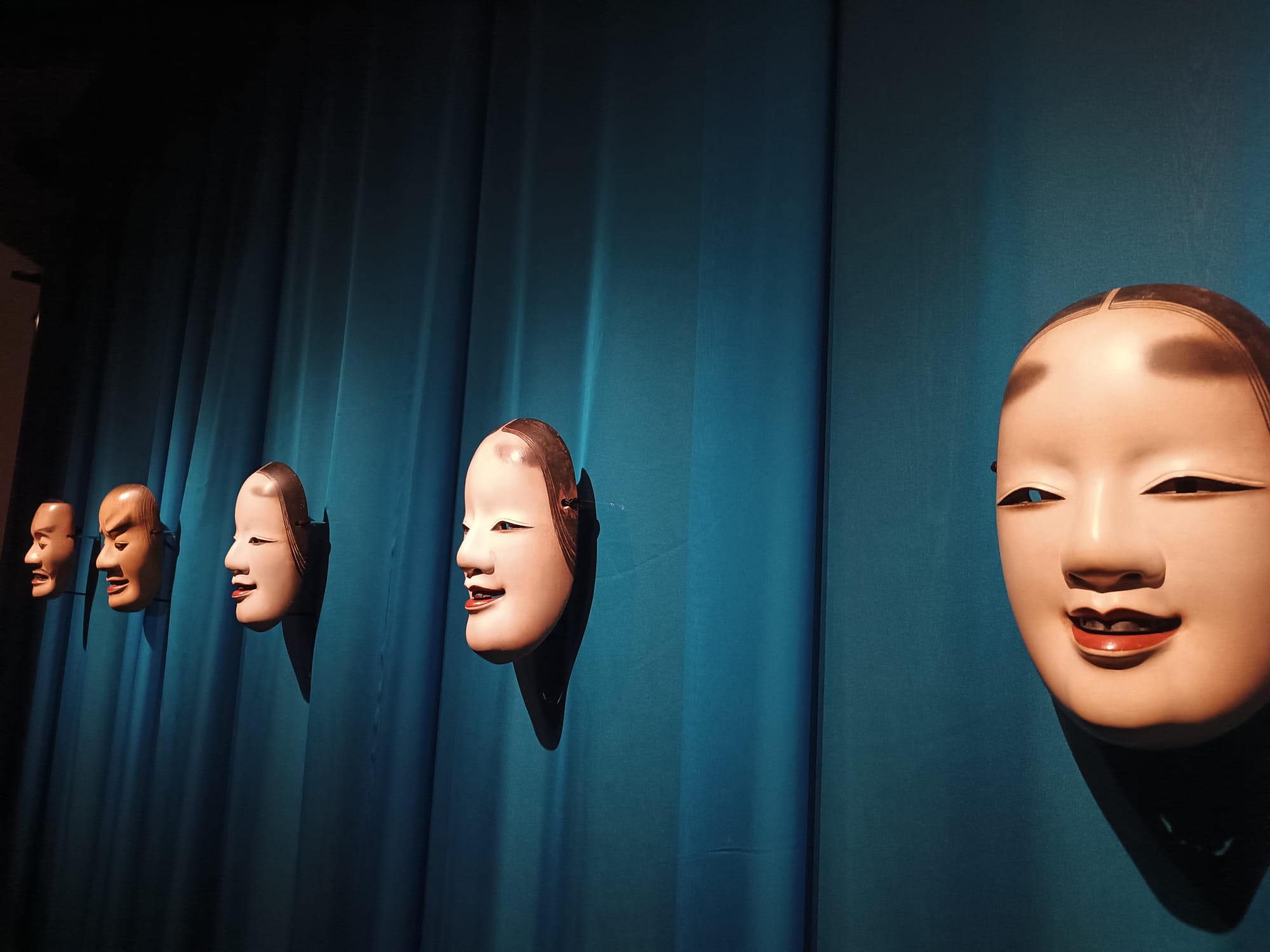
Today, the Manggha Museum explores the relationship between Japan and Poland through art, design, photography, crafts, theatre, technology and contemporary culture. Its collection includes Japanese and Polish works, from woodblock prints and ceramics to kimono, nō masks, posters, photographs and artists’ books.
But before you step inside, it is worth looking at the building itself.
Because the story of Manggha begins with a man who was captivated by Japan long before there was a museum in Kraków dedicated to it.
The Collector Who Fell in Love With Japan
His name was Feliks Jasieński.
A Polish art critic, writer and collector, Jasieński developed an extraordinary passion for Japanese art at the end of the nineteenth and beginning of the twentieth century. He collected prints, paintings, ceramics, textiles, armour and other objects on a remarkable scale.
When he eventually donated his collection to the National Museum in Kraków in 1920, it contained more than 15,000 objects.
It was an astonishing gift.
But the story might have ended there.
Instead, Jasieński’s collection became the seed from which the Manggha Museum would eventually grow.
His Japanese art collection remained with the National Museum for decades. Then, during the Second World War, a young Polish man walked into an exhibition of Japanese art in Kraków.
His name was Andrzej Wajda.
He was nineteen years old.
And the encounter would stay with him for the rest of his life.
The Film Director Who Helped Bring Japan to Kraków
Wajda would go on to become one of Poland’s most celebrated film directors, known internationally for films that explored Polish history, memory and identity.
But he never forgot Jasieński’s collection.
Decades later, in 1987, Wajda received the prestigious Kyoto Prize from the Inamori Foundation. Instead of treating the prize simply as a personal achievement, he used the money to establish the Kyoto–Kraków Foundation, whose purpose was to create a permanent home for Jasieński’s collection.
It was an extraordinary gesture.
A Polish filmmaker had been profoundly affected by Japanese art as a young man.
Years later, Japan honoured him.
And he used that honour to build a bridge between the two cultures.
The result opened in Kraków in 1994 as the Manggha Centre of Japanese Art and Technology. The building was designed by the Japanese architect Arata Isozaki in collaboration with Kraków architects Krzysztof Ingarden, Jacek Ewý and JET Atelier.
Suddenly, Jasieński’s collection had a home.
And Kraków had a place where Poland could look towards Japan—and Japan could look back.
A Building Designed to Feel Like Japan Without Pretending to Be Japan
Manggha’s architecture is one of the reasons the museum is memorable before you have even seen a single artwork.
The building is modern, spacious and deliberately different from the historic architecture surrounding it.
Its roof moves in a long, fluid line, creating the impression of waves.
That seems particularly appropriate beside the Vistula.
The river flows past the museum, while Wawel rises across the water. The effect is almost cinematic: medieval Kraków on one side, a distinctly Japanese-inspired cultural space on the other.
It is a reminder that Kraków has never been only a city looking backwards.
The museum represents a different kind of heritage—the heritage of curiosity.
Of collecting.
Of looking beyond borders.
Of discovering that artistic ideas can travel farther than people.
Inside, the Pace Changes
Once inside Manggha, the noise of Kraków seems to disappear.
The museum does not feel like a treasure house in the traditional sense.
There are no endless rooms packed with objects.
Instead, the space is calm and carefully considered.
The exhibitions give the objects room to breathe.
A Japanese print can command an entire wall.
A piece of ceramics can become an object of contemplation.
A kimono can be studied not simply as clothing, but as a work of art in which pattern, colour, craftsmanship and cultural meaning come together.
This is part of the pleasure of Japanese art.
It rewards attention.
You do not always need to understand every historical detail.
Sometimes you simply need to look.
The Extraordinary World of Japanese Woodblock Prints
For many visitors, the woodblock prints are the natural starting point.
The museum’s collection includes nineteenth- and twentieth-century Japanese prints, as well as picture books by artists including Hokusai and Utamaro.
These works can feel surprisingly contemporary.
Their compositions are often bold.
Their colours can be intense.
Their use of empty space can feel remarkably modern.
And their attention to everyday life makes them endlessly fascinating.
You might find landscapes, actors, beautiful women, animals, plants or scenes from urban life.
Japan appears not as an abstract idea, but as a lived world.
That was part of what made Japanese art so influential in Europe.
Artists discovered a completely different way of thinking about composition.
The picture did not necessarily need to be centred.
A figure could disappear beyond the edge of the image.
A branch could cut across the foreground.
An apparently empty area could become as important as the subject itself.
These ideas would have an enormous influence on Western art.
And Polish artists were paying attention.
Japan in Polish Art
This is perhaps the most fascinating part of Manggha.
The museum is not simply interested in Japanese art.
It is interested in what happened when Japanese art met Poland.
Manggha describes its work as an exploration of the cultural relationship between Poland and Japan, including the phenomenon known as Polish Japonism—the influence of Japanese art on Polish artists.
Artists such as Leon Wyczółkowski, Julian Fałat and Anna Bilińska were among those whose work reflected an interest in Japanese artistic ideas.
Once you know this, Polish art begins to look slightly different.
You start noticing composition.
The treatment of nature.
The importance of decorative pattern.
The influence of Japanese prints.
The attraction of simplicity.
Manggha therefore tells two stories simultaneously.
One is about Japan.
The other is about Poland looking at Japan.
And the second story is perhaps the more surprising one.
It Is More Than a Museum of Old Art
One of the misconceptions about Manggha is that it is primarily a museum of historical Japanese objects.
It is much broader than that.
The collection includes contemporary Japanese, Korean and Polish painting, sculpture, installation, photography, drawing, watercolour, prints and artists’ books, alongside decorative arts such as ceramics, kimono, nō masks and costumes and katagami dyeing stencils.
That mixture keeps the museum from feeling frozen in the past.
One room may take you into centuries-old Japanese traditions.
Another may introduce contemporary design.
Another may reveal the influence of Japan on Polish artists.
The result is less like a history lesson and more like an ongoing conversation.
Japan is not presented as something finished.
It is living, changing and continually being reinterpreted.
Look Closely at the Ceramics
Japanese ceramics are particularly rewarding for visitors who appreciate craftsmanship.
At first, some pieces may seem almost austere.
Then you begin to notice the surface.
The shape.
The irregularity.
The tiny details.
The relationship between the object and the space around it.
Japanese ceramics can make a virtue of imperfection in a way that feels very different from the Western obsession with symmetry and flawless surfaces.
That does not mean the objects are careless.
Quite the opposite.
The restraint often hides extraordinary skill.
A simple bowl may have taken years of experience to make.
The beauty lies in what has been left alone as much as in what has been added.
Kimono, Masks and the Art of Performance
The museum’s collection also reaches into Japanese theatre and dress.
Visitors can encounter kimono and obi sashes, nō masks and costumes, as well as a bunraku puppet.
These objects reveal another side of Japanese culture.
They are not merely decorative.
A nō mask can communicate emotion through incredibly subtle changes in angle and light.
A kimono can transform the body into a moving composition of colour and pattern.
Theatrical costumes can tell stories before the performer even speaks.
Seen together, these objects make it easier to understand how Japanese visual culture extends far beyond painting.
Beauty appears in clothing.
In movement.
In theatre.
In everyday objects.
In the way a room is arranged.
The Museum Has Its Own Wajda Story
There is something especially touching about the presence of Andrzej Wajda throughout Manggha.
The director who helped bring the museum into existence also left behind a considerable body of drawings and paintings.
The museum’s collection includes his sketches from different periods of his life, including drawings connected with his films and stage productions and works made during his travels in Japan.
These drawings offer a more intimate view of Wajda than his films do.
Here, the famous director becomes an observer.
He sketches.
He notices.
He records.
And Japan becomes part of his personal visual memory.
It creates a beautiful circle.
A young Wajda discovers Japanese art in Kraków.
Japan later honours Wajda.
Wajda uses that honour to create Manggha.
And eventually, his own drawings become part of the museum’s story.
Photography Takes You Into Another Japan
Photography has also been part of Manggha’s collection from the beginning.
Among its historical photographs are two sets documenting journeys to Japan in 1934: photographs by the Polish Jewish traveller Ze’ev Aleksandrowicz and by the German art historian and ethnographer Franz Stoedtner.
These images offer something a painting cannot.
They show streets.
Faces.
Buildings.
Landscapes.
Ordinary moments.
Japan appears as a real place rather than an artistic idea.
And that makes the photographs particularly fascinating when placed alongside the older prints and objects.
You begin to see how the Western image of Japan changed over time.
From fascination and imagination to documentation and cultural exchange.
A Museum Built on Friendship
Perhaps the most beautiful part of Manggha’s story is that it was created through friendship as much as through art.
The Kyoto–Kraków Foundation grew from Wajda’s relationship with Japan, while Japanese support played a significant role in making the museum possible. The cornerstone ceremony in 1993 even included a blessing by Shinto priests.
The museum later welcomed Emperor Akihito and Empress Michiko in 2002.
This is why Manggha feels different from a museum that simply happens to contain Japanese objects.
Its very existence is evidence of cultural exchange.
Poland and Japan are geographically distant.
Their histories are very different.
Their languages, religions and traditions developed along separate paths.
Yet art created a connection.
A collector became fascinated.
A filmmaker remembered.
A foundation was established.
Architects collaborated.
A museum appeared beside the Vistula.
And now generations of visitors can walk through it.
The View Across the Vistula
Eventually, leave the galleries.
Look outside.
Wawel Castle is there across the river.
It is one of the most recognisable sights in Poland, associated with Polish kings, national history and centuries of Kraków’s past.
From Manggha, however, Wawel becomes part of a different composition.
The castle is framed by the museum’s modern architecture and the broad sweep of the Vistula.
Old Poland meets modern Japan.
Stone meets glass.
A royal hill meets a wave-like roof.
It is one of the most beautiful cultural juxtapositions in Kraków.
And you do not need to be an art expert to appreciate it.
Why Manggha Belongs on a Kraków Itinerary
There are museums in Kraków that you visit because they contain famous masterpieces.
There are others that you visit because they explain the city.
Manggha is different.
You visit because it reveals a relationship you might never have expected to find.
Japan and Poland.
Separated by thousands of kilometres, yet connected through collectors, artists, filmmakers, architects and generations of cultural exchange.
It also offers something that can be surprisingly rare in a major tourist city: tranquillity.
After walking through the crowded streets of the Old Town, entering Manggha feels like lowering the volume.
The exhibitions invite you to slow down.
To look carefully.
To notice details.
To appreciate objects that were made with patience.
And then, when you leave, the Vistula is waiting outside.
The Perfect Museum for a Curious Traveller
Manggha is particularly rewarding if you are the kind of traveller who likes discovering the unexpected.
If you came to Kraków for medieval architecture, it gives you contemporary architecture.
If you came for Polish history, it introduces you to a Polish fascination with Japan.
If you came for art, it offers everything from historic woodblock prints to contemporary installations.
And if you simply want somewhere beautiful and peaceful to spend an hour or two, it delivers that too.
The museum is currently open Tuesday through Sunday from 10am to 6pm, and its programme changes throughout the year. Current exhibitions include Japanese Design Today 100, running from 15 May to 30 August 2026, and Akitsushima. The Island of Dragonflies, running from 19 July to 11 November 2026.
That changing programme is another reason to return.
Manggha is not a museum you necessarily finish in one visit.
It is a place that keeps opening new windows onto the relationship between two cultures.
A Different Way to See Kraków
Perhaps that is the real pleasure of Manggha.
It encourages you to see Kraków differently.
The city is often introduced through its Polish identity: kings, churches, Jewish heritage, literature, war and political history.
But Kraków has always been connected to the wider world.
Its artists collected foreign art.
Its intellectuals travelled.
Its museums preserved objects from distant cultures.
Its contemporary institutions continue those conversations.
Manggha is one of the clearest expressions of that outward-looking Kraków.
It says that you can love Polish culture and still be fascinated by somewhere thousands of kilometres away.
You can look at Japanese prints and discover something about Polish art.
You can walk through a Japanese-inspired building and look across the Vistula at Wawel.
And you can leave the museum understanding that cultural identity is rarely as simple as a map suggests.
The Art of Looking Closer
Perhaps the greatest lesson Manggha offers is a simple one: slow down.
Look at the line of a woodblock print.
Notice the texture of a ceramic bowl.
Study the expression on a nō mask.
Watch the way light falls across a kimono.
Then step outside and look at the river.
Wawel is still there.
The city is still moving.
But for an hour or two, you have travelled somewhere else without leaving Kraków.
That is the particular magic of this museum.
It does not attempt to turn Poland into Japan.
Nor does it present Japan as some distant, exotic curiosity.
Instead, it tells a more interesting story—one about two cultures meeting through curiosity, admiration and art.
And perhaps that is why Manggha deserves a place on any thoughtful Kraków itinerary.
Not simply because it is a beautiful museum.
Not simply because it houses remarkable Japanese art.
But because, beside the Vistula, beneath a roof inspired by waves, it tells the story of how far a single fascination can travel.
From a collector’s home.
To a national museum.
To the imagination of a young filmmaker.
From Kyoto to Kraków.
And finally, to you.
Leave a Reply