Author: Why Poland?

  • 10 of the Best Restaurants in Kraków You Must Try

    There are cities you visit for the monuments, cities you visit for the museums, and then there are cities where food becomes part of the reason you want to return. Kraków belongs firmly in the last category. Its historic centre may draw visitors with Wawel Castle, the towers of St Mary’s Basilica and the narrow streets of the Old Town, but after a few days here, it is often the meals that stay in your memory.

    A bowl of steaming żurek on a cold evening. Pierogi arriving at the table in a cloud of heat. A plate of crispy duck served in a room filled with the atmosphere of an old Kraków townhouse. A long dinner in Kazimierz, when the conversation continues long after the plates have been cleared. The city’s food scene is no longer limited to the heavy, comforting dishes traditionally associated with Polish cuisine. Alongside old recipes, a younger generation of chefs is reinterpreting Polish ingredients, bringing seasonal produce, modern techniques and influences from elsewhere in Europe into the kitchens of Kraków.

    That variety is what makes eating here so enjoyable. You can have a completely traditional Polish lunch without spending a fortune, then dress up for an elegant dinner that feels more like a special occasion. You can eat beneath the vaulted ceilings of a historic restaurant, sit at a lively table in Kazimierz or find yourself in a contemporary dining room where the menu changes with the seasons.

    For travellers wondering where to begin, these are ten Kraków restaurants worth knowing about — not simply because of what is on the plate, but because each offers a different way of experiencing the city.

    Czarna Kaczka: A Taste of Traditional Poland

    Czarna Kaczka

    Some restaurants feel as though they were designed specifically for visitors who have just arrived in Poland and want to understand what Polish cooking is really about. Czarna Kaczka, or “The Black Duck”, is one of them.

    Located on Poselska Street, just a short walk from the Old Town, the restaurant focuses on Polish cuisine and has become known for hearty dishes that draw on familiar national traditions. It is the sort of place where dinner feels substantial rather than minimalist, and where traditional Polish flavours are allowed to take centre stage.

    For a first meal in Kraków, that is exactly what many travellers are looking for.

    Polish food is often misunderstood abroad as being simply heavy and filling, but a good Polish kitchen is much more interesting than that. Sourness, sweetness, smoked flavours, mushrooms, cabbage, potatoes, berries and herbs appear in different combinations, creating food that feels closely connected to the country’s landscape and seasons.

    Czarna Kaczka is a good introduction to that world.

    Come hungry, take your time and treat dinner as the beginning of your Polish food education rather than simply another meal between sightseeing stops.

    Starka: The Warm, Old-Kraków Dinner

    Restauracja Starka

    Kazimierz has changed enormously over the past few decades, but there are still restaurants where the neighbourhood’s atmosphere feels inseparable from the meal.

    Starka, on Józefa Street, is one of those places.

    The restaurant serves Polish cuisine in an intimate setting, making it particularly appealing in the evening, when the streets of Kazimierz begin to glow under the old lamps and the neighbourhood takes on a slower rhythm.

    This is the kind of restaurant where you should resist rushing.

    Order something traditional. Try a Polish soup. Share pierogi. Leave room for dessert. If you have never tasted Polish cuisine beyond the occasional pierogi found elsewhere in Europe, this is the moment to discover how much more there is to it.

    The appeal is not simply the food.

    It is the whole evening.

    Kazimierz is one of Kraków’s most atmospheric districts, and dinner here allows you to experience it at the right pace. You leave the restaurant and find yourself surrounded by old façades, small bars, cafés and streets that invite another walk before returning to the hotel.

    Szara Gęś: Dinner on the Main Square

    Szara Gęś w Kuchni

    There are few restaurant locations in Kraków more dramatic than the Main Market Square.

    At Szara Gęś, the setting becomes part of the experience. The restaurant occupies a historic address directly on Rynek Główny, placing you at the heart of the city while offering a more refined interpretation of Polish cuisine.

    This is the restaurant to consider when dinner is meant to be an occasion.

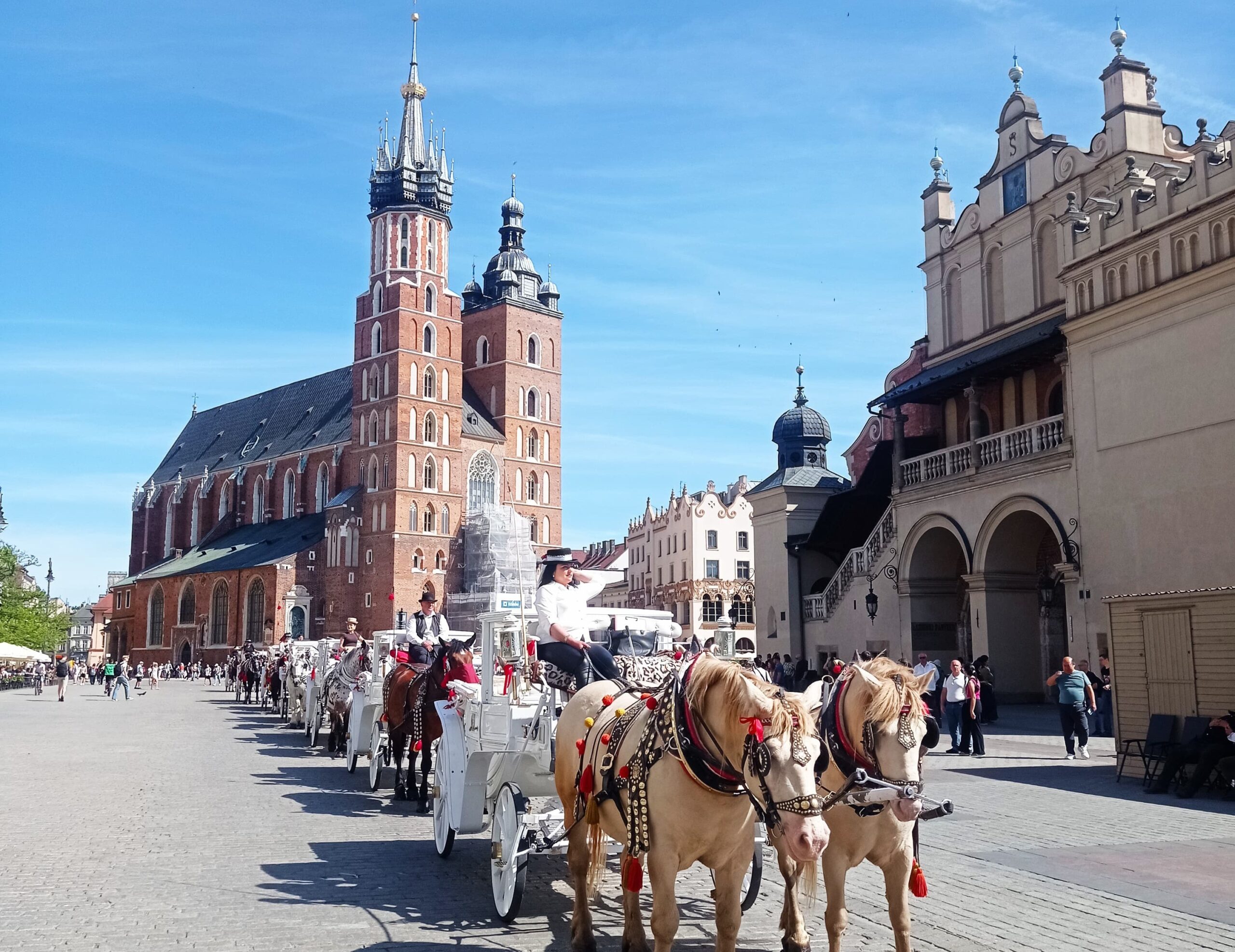
    Instead of looking for the cheapest meal near the main tourist sights, choose a table, settle in and watch Kraków move outside the windows. During the day, the square is filled with visitors, horse-drawn carriages and people crossing between the Cloth Hall and St Mary’s Basilica. In the evening, the atmosphere changes. The crowds thin, the historic façades become softer under the lights and the square begins to feel almost theatrical.

    That is when a long dinner here makes sense.

    The food is rooted in Polish traditions but presented with a more contemporary sensibility, making it a useful choice for travellers who want to experience Polish cuisine without necessarily choosing the most rustic version of it.

    And sometimes the best souvenir from Kraków is not something you buy.

    It is an evening you remember.

    Pod Różą: An Elegant Kraków Classic

    Restauracja Pod Różą

    On Floriańska Street, one of the historic routes leading towards the Main Market Square, Pod Różą offers a very different kind of dining experience.

    The restaurant is part of the Hotel Pod Różą, one of Kraków’s historic hotels, and its surroundings provide the kind of elegant setting that makes you want to slow down before the first course even arrives.

    This is not the restaurant to choose when you want to eat quickly between Wawel and the Cloth Hall.

    It is a place for an evening.

    The menu is more refined, the atmosphere more formal and the experience better suited to a celebration, romantic dinner or final night in Kraków.

    There is something particularly satisfying about eating in a historic city and choosing a restaurant that respects that history without turning it into a theatrical costume.

    Kraków has spent centuries reinventing itself, and its best restaurants understand that tradition does not mean refusing to change.

    Morskie Oko: The Mountain Spirit of Southern Poland

    Morskie Oko

    The name Morskie Oko will be familiar to anyone who has explored the Tatra Mountains. It is the name of one of Poland’s most famous mountain lakes, and the Kraków restaurant bearing that name embraces the atmosphere of the country’s southern highlands.

    Inside, the restaurant evokes the traditional character of a mountain inn, creating a distinctly different mood from the elegant restaurants surrounding the Main Square.

    The food follows the same direction, drawing attention to Polish and regional flavours.

    For visitors who are not travelling onward to Zakopane or the Tatra Mountains, a meal here offers a small taste of that world.

    Expect hearty food and the sort of portions that make sense after a day spent walking.

    And if you have just returned from a long day exploring Kraków, that may be exactly what you want.

    There is a particular comfort to sitting down in a warm restaurant in the evening with a substantial Polish meal in front of you. It is not sophisticated in the way fine dining is sophisticated.

    It is something different.

    It feels generous.

    Kogel Mogel: Modern Kraków With Polish Roots

    Restauracja Kogel Mogel

    Kogel Mogel takes its name from a traditional Polish sweet made from egg yolks and sugar, but the restaurant itself is much more than a nostalgic reference to old Polish cooking.

    Located on Sienna Street, close to the historic centre, it offers a more contemporary approach to Polish cuisine.

    This is where travellers can begin to understand how Polish food has changed.

    The ingredients may be familiar — meat, fish, vegetables, mushrooms, grains and seasonal produce — but the presentation and combinations are more modern. Instead of simply reproducing dishes exactly as they might have appeared decades ago, contemporary Polish restaurants are increasingly asking what those ingredients can become.

    That evolution is one of the most exciting parts of Kraków’s food scene.

    The city does not need to choose between its culinary past and its future.

    It can have both.

    A traditional pierogi shop can exist around the corner from a sophisticated tasting menu. A centuries-old recipe can inspire a modern dish. And visitors get to decide which version of Poland they want to discover.

    Pod Aniołami: Dining Beneath the Old Town

    Pod Aniołami

    There is something wonderfully appropriate about eating traditional Polish food in the historic centre of Kraków.

    Pod Aniołami, on Grodzka Street, embraces that feeling. The restaurant is associated with traditional Polish cooking and is located in a historic setting that adds considerably to the atmosphere.

    Grodzka is one of the streets where Kraków’s history feels particularly close. It runs towards Wawel, passing churches and centuries-old buildings along the way.

    A meal here can therefore become part of a larger evening.

    Walk down Grodzka after sunset.

    Look towards Wawel.

    Stop for dinner.

    Then continue through the Old Town while the crowds have begun to disappear.

    The food itself is the main reason to come, but the setting reminds you that eating in Kraków is rarely just about the restaurant.

    The city is always around you.

    Qrudo Food & Wine: The Contemporary Side of Kazimierz

    Qrudo Food & Wine

    For travellers who want to see the more contemporary side of Kraków’s restaurant scene, Qrudo Food & Wine offers a different experience.

    Located on Świętego Wawrzyńca in Kazimierz, the restaurant sits in one of the neighbourhood’s most energetic parts, where old industrial buildings, cafés, bars and restaurants have transformed the area into one of Kraków’s favourite places to spend an evening.

    The food is modern European rather than strictly traditional Polish, making it a good choice when you have already eaten your way through pierogi, żurek and other classics and want something different.

    That contrast is important.

    A good food trip through Kraków should not be about eating the same three Polish dishes every day.

    The city’s modern restaurants show how confidently Kraków has entered the wider European food scene. Local ingredients can sit comfortably alongside international techniques, and traditional flavours can appear in unexpected forms.

    It is another reason to spend an evening in Kazimierz.

    The neighbourhood has become one of the best places in the city to simply wander until you find somewhere that looks inviting.

    Gościnna Chata: Rustic Polish Cooking

    Restauracja Gościnna Chata – małopolska kuchnia regionalna

    If your idea of Polish food involves rustic cooking, regional ingredients and generous portions, Gościnna Chata is the kind of restaurant to seek out.

    On Sławkowska Street, close to the Old Town, it focuses on regional food from Małopolska, the region surrounding Kraków.

    That regional connection matters.

    Poland is not one single culinary tradition. Recipes and ingredients change from region to region, influenced by geography, history, climate and neighbouring cultures. Kraków sits in southern Poland, close to the Carpathians, and its food traditions naturally have their own character.

    A restaurant such as this allows visitors to move beyond the generic idea of “Polish food” and discover something more local.

    The atmosphere is deliberately rustic, making it a good option for travellers who want their dinner to feel connected to the countryside and regional traditions rather than contemporary city dining.

    It is particularly appealing after a day spent exploring the Old Town, when what you want is something warm, familiar and unmistakably Polish.

    Bottiglieria 1881: When Dinner Becomes an Event

    Bottiglieria 1881

    Then there are restaurants you visit not simply because you are hungry, but because you want to make an evening of it.

    Bottiglieria 1881 in Kazimierz belongs in that category.

    The restaurant has become one of the names associated with Kraków’s high-end dining scene, offering a sophisticated experience in the heart of the historic Jewish district.

    Here, the meal is about more than ordering a main course.

    It is about the rhythm of an evening: the setting, the service, the wine, the presentation and the succession of flavours.

    For travellers who enjoy fine dining, this is where Kraków’s culinary identity becomes more ambitious. Polish ingredients can be treated with the same care and precision that you would expect in leading restaurants elsewhere in Europe.

    It is also a reminder that Kraków’s food scene has matured considerably.

    The city is no longer simply a destination for inexpensive traditional food.

    It has become a place where serious cooking can stand alongside its historic architecture, museums and cultural attractions.

    For a special occasion, this is the kind of dinner that can become one of the defining memories of the trip.

    What Should You Eat in Kraków?

    The best way to approach Kraków’s restaurants is to arrive curious.

    Start with pierogi, of course. They are one of Poland’s most recognisable foods, but the variety is far greater than many visitors expect. They can be filled with potatoes and farmer’s cheese, meat, cabbage and mushrooms, seasonal vegetables or sweeter fillings.

    Then try żurek, the distinctive sour rye soup that is one of Poland’s great comfort foods.

    Look for dishes featuring mushrooms, which appear frequently in Polish cooking, especially in autumn. Try regional meats and hearty soups. Explore Polish cakes and pastries. And if you see something on a menu that you cannot pronounce, ask.

    Sometimes the unfamiliar dish becomes the one you remember.

    Kraków Is a City Best Experienced at the Table

    The great pleasure of eating in Kraków is that food rarely feels separate from the rest of the city.

    You might have lunch a few steps from the medieval Main Market Square, then spend the afternoon walking around Wawel. Later, you cross the Vistula or wander through Kazimierz as the lights come on, eventually finding yourself sitting at a wooden table with a plate of steaming Polish food in front of you.

    The meal becomes part of the journey.

    That is why the best restaurants in Kraków are not necessarily the ones with the most elaborate menus or the most expensive dining rooms.

    Sometimes the restaurant you remember is the one where you ate after getting caught in the rain.

    Sometimes it is the tiny place where you discovered your favourite pierogi.

    Sometimes it is the elegant dinner you booked for your final night.

    And sometimes it is simply the restaurant where you sat for two hours, talking about everything you had seen that day.

    Kraków has enough restaurants to make every evening different.

    So come hungry.

    Order something you have never tried.

    Stay a little longer than planned.

    And let dinner become part of your Kraków story.
  • Kraków Zoo Is More Than a Wildlife Experience – It’s a Center for Animal Conservation

    In the wooded hills west of Kraków, a zoo is trying to make the traditional visit mean something more: not simply seeing wild animals, but understanding why their survival matters.

    The road into Kraków’s Wolski Forest feels like a departure from the city.

    The traffic thins. Buildings give way to trees. Paths disappear beneath a canopy of green, and somewhere beyond the forest stands one of Kraków’s most unexpected attractions: the city’s zoological garden.

    Kraków Zoo opened to visitors in 1929 and today occupies about 20 hectares in Wolski Forest. The collection includes roughly 1,500 animals representing more than 270 species, with more than 100 species classified as threatened or endangered.

    For a visitor, the obvious appeal is immediate. There are giraffes, elephants, snow leopards, red pandas, chimpanzees, Humboldt penguins and other animals that most people will never encounter outside a wildlife documentary.

    But the more interesting story begins when you stop thinking of the zoo simply as a place to see animals.

    A zoo inside a forest

    Location is the first thing that distinguishes Kraków Zoo.

    Rather than sitting amid dense urban development, it is surrounded by Wolski Forest, a large wooded area that has long served as a recreational landscape for Kraków residents. Walking trails and cycling routes run through the forest, making the journey to the zoo feel more like a countryside excursion than a conventional city attraction.

    The setting also changes the rhythm of a visit.

    There is less of the feeling of moving from one exhibit to another and more of a sense of wandering through woodland, with animal enclosures appearing between trees and along paths.

    It is an unusually green way to encounter wildlife.

    Conservation behind the glass

    The modern zoo has a complicated role.

    It is, undeniably, a place where people come to look at animals. But institutions such as Kraków Zoo increasingly frame that public experience around conservation, education and the protection of threatened species.

    Kraków Zoo says that more than 100 of the species in its collection are endangered or threatened. Its residents include species such as the Przewalski’s horse, Rothschild’s giraffe, pygmy hippopotamus, snow leopard, Amur tiger, addax, chimpanzee, Indian elephant and Andean condor.

    The idea is not that a zoo can replace the wild.

    It cannot.

    Instead, conservation-focused zoological gardens can serve as a safeguard for populations of threatened species, participate in coordinated breeding programs and give the public a direct encounter with animals whose natural habitats are under pressure.

    That distinction matters.

    A visitor who watches a snow leopard sleeping in the shade is seeing one individual animal. But the larger story is about an entire species whose future depends on what happens far beyond Kraków.

    From spectacle to understanding

    This is where a zoo visit can become more meaningful.

    A child may arrive wanting to see a tiger. An adult may come for the elephants. Someone else may simply want a walk through the forest.

    But standing in front of an endangered species changes the scale of the experience.

    The animal is no longer just an exotic attraction. It becomes a reminder of a much larger landscape—mountains, forests, rivers and grasslands that may be thousands of kilometers away.

    The zoo’s educational role is therefore inseparable from its conservation mission. Kraków Zoo describes its purpose as combining care for animals with inspiration to connect with nature.

    That may sound modest, but it is increasingly important in an age when many people’s understanding of wildlife comes almost entirely through screens.

    There is a difference between watching a snow leopard on television and standing quietly beside an enclosure while it moves through the landscape in front of you.

    The latter can make the animal feel real.

    A living collection

    Kraków Zoo is a relatively compact institution, but its collection is diverse. The zoo currently presents around 1,500 animals from more than 270 species, including both familiar charismatic animals and less celebrated species.

    That variety creates an opportunity to look beyond the animals that traditionally dominate the public imagination.

    Conservation is not only about pandas, elephants and big cats.

    It is also about species that rarely appear on postcards.

    A modern zoo can therefore function as a kind of introduction to biodiversity: a place where visitors begin with the animals they already recognize and gradually discover the enormous variety of life around them.

    Why the setting matters

    There is another lesson in Kraków Zoo that has little to do with the animals themselves.

    It is about proximity.

    You do not have to travel to the Amazon, East Africa or Central Asia to begin thinking about global wildlife conservation. You can begin in a forest on the edge of a European city.

    That is perhaps why the zoo works particularly well as a family destination. The experience is accessible without feeling entirely urban, and the forest provides a natural backdrop for a day spent outdoors.

    For travelers who have already seen Kraków’s medieval center, museums and historic churches, the zoo offers a different side of the city: greener, slower and much more connected to the natural landscape.

    A different kind of souvenir

    The best souvenir from Kraków Zoo may not be a photograph.

    It may be a question.

    What happens to these animals outside the enclosure?

    How much habitat does a species need? What happens when forests disappear? Can breeding programs help? And what does it actually mean to protect a species?

    Those questions are more valuable than simply ticking another attraction off a travel list.

    Kraków Zoo cannot recreate the wilderness. No zoo can.

    What it can do is bring people close enough to wildlife to make the idea of conservation personal.

    And that is what makes a visit here more than a wildlife experience.

    It is a reminder that the world’s wild places are not as distant as they sometimes seem—and that protecting them begins, in part, with learning to care about what we see.

    Plan your visit: Kraków Zoo official website

  • 10 Family-Friendly Things to See in Kraków

    10 Family-Friendly Things to See in Kraków

    Kraków is a city that seems to have been built for stories. Beneath the towers of Wawel Castle, a dragon is said to have once lived in a cave. In the centre of the city, medieval streets and market stalls lie buried beneath the pavement. Along the Vistula, boats drift past the old royal hill, while beyond the historic centre, forests, gardens and wide-open spaces offer a welcome escape from the crowds. For adults, Kraków is a city of kings, churches, art and centuries of history. For children, it can be something even better: a place where legends appear to have escaped from books and become part of the landscape.

    That is what makes Kraków such an unexpectedly good family destination. You can spend the morning wandering through the Old Town and, rather than asking children to stand quietly in front of another painting or historic plaque, give them a dragon to find. A visit to Wawel becomes an adventure beneath the castle. The Main Market Square becomes the entrance to an underground archaeological world. A walk along the river turns into a search for mythical creatures, while a trip outside the centre leads into the wooded hills of Las Wolski and one of Poland’s most atmospheric zoos. The city offers enough history to satisfy adults without asking children to spend the entire holiday behaving like miniature historians.

    The secret is not to try to see Kraków exactly as an adult would. The city’s greatest family experiences are often found in the spaces between the famous sights: a shaded stretch of Planty where children can run after a morning of sightseeing, an ice cream beside the Vistula, a boat appearing around the bend in the river, or the sudden roar of a dragon breathing fire beneath Wawel Hill. Build the day around these moments and Kraków becomes much less about ticking attractions off a list and much more about discovering a city together.

    Begin With a Dragon at Wawel

    There are few better introductions to Kraków for a child than the Wawel Dragon. The bronze creature standing beside the Vistula has become one of the city’s most beloved symbols, but the legend behind it is much older than the statue itself. According to the traditional story, a monstrous dragon once lived beneath Wawel Hill and terrorised the people of Kraków, demanding animals and even young women as food. Knights tried and failed to defeat it until a clever shoemaker devised a more unusual plan: a sheep stuffed with sulphur was left for the dragon to eat. The creature swallowed it, became desperately thirsty and drank so much water from the Vistula that it eventually burst.

    Today, the legend is made remarkably tangible. The Dragon’s Den is a real cave beneath Wawel Hill, and during the visitor season families can descend into its dark passages before emerging beside the river. Outside, the famous bronze dragon waits near the mouth of the cave, occasionally sending a burst of real fire into the air. It is an almost perfect family attraction because nobody needs to explain why it is interesting. Children understand immediately. There is a castle above them, a cave beneath them, a river beside them and a dragon in front of them. Even parents who have spent the morning immersed in Polish history are likely to find themselves waiting for the next fiery breath.

    From here, the Vistula provides a natural continuation. Instead of immediately returning to the crowded centre, walk along the river and let the city open up. Wawel rises above the water behind you, while the opposite bank gives a broader view of the castle and the historic skyline. The pace becomes slower, and that matters when travelling with children. A family holiday in Kraków is not won by seeing the most sights before sunset. It is won by knowing when to stop.

    Let Wawel Become a Castle, Not a History Lesson

    Wawel is one of Poland’s most important historic places, but children do not need to know the names of every monarch who lived here to appreciate it. The hill itself does much of the work. Its walls, towers and courtyards have the unmistakable atmosphere of a medieval fortress, while the royal chambers and cathedral introduce a world of kings, queens, knights and ceremonies that feels far removed from modern Kraków.

    The trick is to let children imagine the place before explaining it. Ask where they think the king slept. Let them search for the most impressive room. Look down from the hill towards the Vistula and imagine how the city would have looked hundreds of years ago. History becomes easier to understand when it is connected to physical spaces rather than presented as a collection of dates. Wawel was not simply a chapter in a textbook; it was a home, a centre of power and a place where generations of people actually lived.

    And when attention begins to disappear, that is your signal to leave the castle rather than force another exhibition. The Dragon’s Den and river are waiting below.

    Beneath the Main Square, Another Kraków Is Waiting

    Few family attractions in Kraków are as effective at turning history into adventure as Rynek Underground. From the surface, the Main Market Square is a spectacular but very familiar European city space: St Mary’s Basilica dominates one side, the Cloth Hall stretches across the centre and cafés occupy the surrounding streets. Yet beneath all this modern activity lies a much older Kraków.

    The underground museum takes visitors below the square, where archaeological discoveries reveal the medieval marketplace and the lives of the people who once worked and traded here. The experience is particularly effective for children because the idea is so simple: the city you can see is not the oldest city. There is another one underneath it.

    Descending underground changes the atmosphere immediately. The light disappears, the modern square becomes distant and old stone, archaeological remains and objects from everyday life take its place. Children who might have little patience for a conventional history museum can become surprisingly absorbed when the story involves going underground and discovering something hidden.

    It is one of those experiences that also changes the way you see Kraków after leaving. Once you know what lies beneath the Main Square, every old street feels as though it might have another story buried below it.

    When the City Gets Too Much, Find the Green

    Kraków’s historic centre is wonderfully walkable, but even the most enthusiastic young traveller eventually needs somewhere to run. Planty, the green belt surrounding the Old Town, is therefore one of the most useful places in the city for families. It is not an attraction in the conventional sense, and that is precisely why it works.

    After the crowds of the Main Square, the trees and paths provide a natural pause. Children can move ahead without the constant pressure of navigating busy streets, while parents can sit for a few minutes and watch the city continue around them. The old medieval walls that once surrounded Kraków have largely disappeared, but Planty follows their former line, creating a green ring between the historic centre and the newer city.

    It is worth resisting the urge to make every stop educational. Let children notice things for themselves. A statue, a bird, an unusual building glimpsed through the trees, a fountain or simply a patch of grass can become more memorable than another carefully explained historical fact. Family travel works best when there is room for discovery that nobody planned.

    And that is perhaps Kraków’s greatest advantage with children: you can keep the history, but you do not have to make the entire trip feel like a lesson.

  • The Manggha Museum in Kraków Is a Haven for Japanese Art and Culture

    The Manggha Museum in Kraków Is a Haven for Japanese Art and Culture

    There is a moment, just after crossing the Vistula, when Kraków seems to change character.

    The towers and medieval roofs of the Old Town are still visible, but the atmosphere becomes quieter. Across the river, beside the water, stands a building unlike almost anything else in the city. Its long, undulating roof seems to rise and fall like a wave, while the broad glass façade opens towards the river and, beyond it, Wawel Castle.

    This is Manggha, Kraków’s remarkable museum of Japanese art and technology.

    For a city so closely associated with Polish kings, Gothic churches and Renaissance architecture, it is an unexpected sight. Yet the museum belongs here. Its story is not really about a distant culture arriving in Poland from somewhere else. It is about a fascination that has been growing for generations—one that began with a remarkable Polish collector, survived political upheaval and eventually inspired the creation of one of the country’s most distinctive cultural institutions.

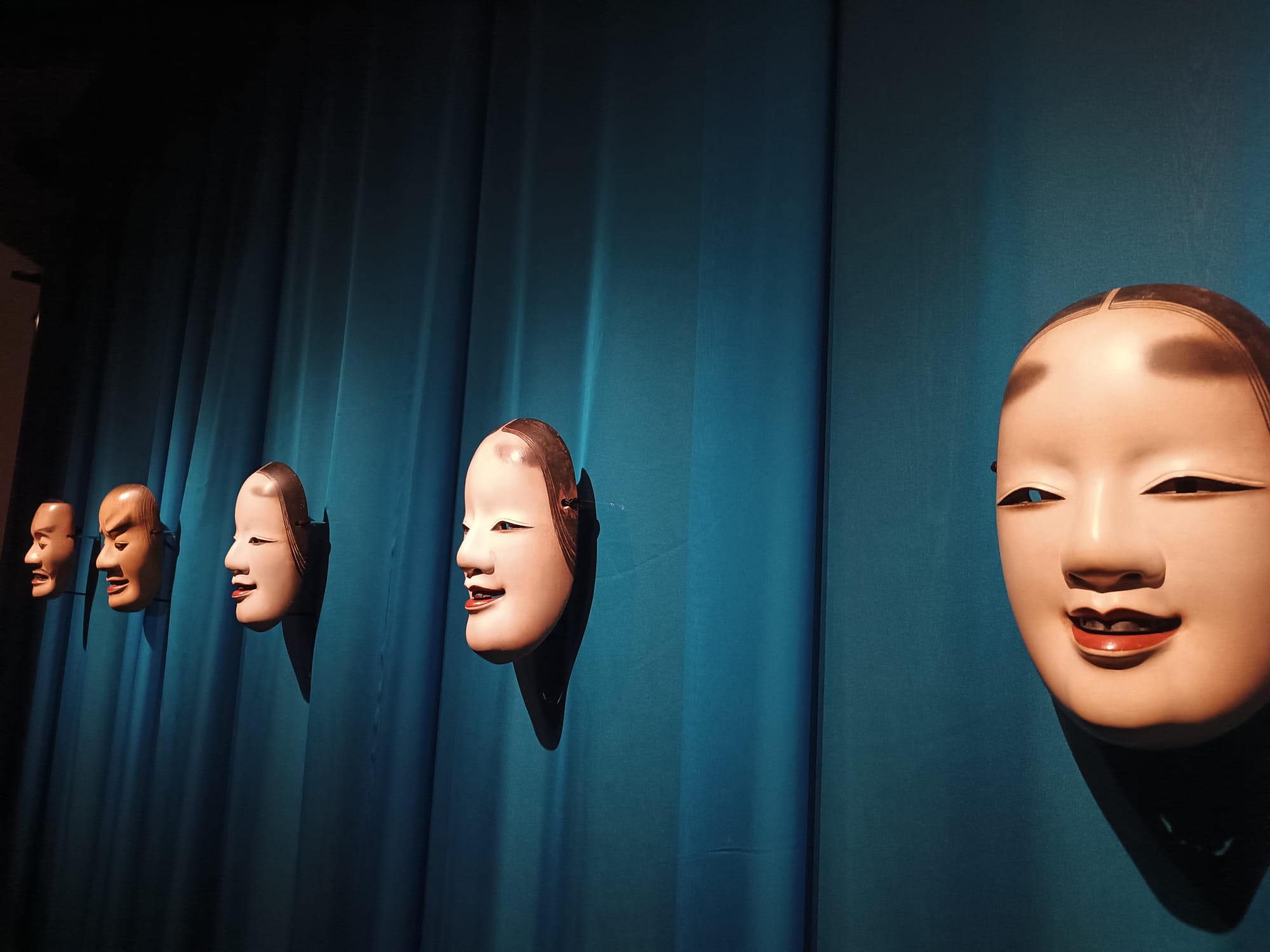
    Today, the Manggha Museum explores the relationship between Japan and Poland through art, design, photography, crafts, theatre, technology and contemporary culture. Its collection includes Japanese and Polish works, from woodblock prints and ceramics to kimono, nō masks, posters, photographs and artists’ books.

    But before you step inside, it is worth looking at the building itself.

    Because the story of Manggha begins with a man who was captivated by Japan long before there was a museum in Kraków dedicated to it.

    The Collector Who Fell in Love With Japan

    His name was Feliks Jasieński.

    A Polish art critic, writer and collector, Jasieński developed an extraordinary passion for Japanese art at the end of the nineteenth and beginning of the twentieth century. He collected prints, paintings, ceramics, textiles, armour and other objects on a remarkable scale.

    When he eventually donated his collection to the National Museum in Kraków in 1920, it contained more than 15,000 objects.

    It was an astonishing gift.

    But the story might have ended there.

    Instead, Jasieński’s collection became the seed from which the Manggha Museum would eventually grow.

    His Japanese art collection remained with the National Museum for decades. Then, during the Second World War, a young Polish man walked into an exhibition of Japanese art in Kraków.

    His name was Andrzej Wajda.

    He was nineteen years old.

    And the encounter would stay with him for the rest of his life.

    The Film Director Who Helped Bring Japan to Kraków

    Wajda would go on to become one of Poland’s most celebrated film directors, known internationally for films that explored Polish history, memory and identity.

    But he never forgot Jasieński’s collection.

    Decades later, in 1987, Wajda received the prestigious Kyoto Prize from the Inamori Foundation. Instead of treating the prize simply as a personal achievement, he used the money to establish the Kyoto–Kraków Foundation, whose purpose was to create a permanent home for Jasieński’s collection.

    It was an extraordinary gesture.

    A Polish filmmaker had been profoundly affected by Japanese art as a young man.

    Years later, Japan honoured him.

    And he used that honour to build a bridge between the two cultures.

    The result opened in Kraków in 1994 as the Manggha Centre of Japanese Art and Technology. The building was designed by the Japanese architect Arata Isozaki in collaboration with Kraków architects Krzysztof Ingarden, Jacek Ewý and JET Atelier.

    Suddenly, Jasieński’s collection had a home.

    And Kraków had a place where Poland could look towards Japan—and Japan could look back.

    A Building Designed to Feel Like Japan Without Pretending to Be Japan

    Manggha’s architecture is one of the reasons the museum is memorable before you have even seen a single artwork.

    The building is modern, spacious and deliberately different from the historic architecture surrounding it.

    Its roof moves in a long, fluid line, creating the impression of waves.

    That seems particularly appropriate beside the Vistula.

    The river flows past the museum, while Wawel rises across the water. The effect is almost cinematic: medieval Kraków on one side, a distinctly Japanese-inspired cultural space on the other.

    It is a reminder that Kraków has never been only a city looking backwards.

    The museum represents a different kind of heritage—the heritage of curiosity.

    Of collecting.

    Of looking beyond borders.

    Of discovering that artistic ideas can travel farther than people.

    Inside, the Pace Changes

    Once inside Manggha, the noise of Kraków seems to disappear.

    The museum does not feel like a treasure house in the traditional sense.

    There are no endless rooms packed with objects.

    Instead, the space is calm and carefully considered.

    The exhibitions give the objects room to breathe.

    A Japanese print can command an entire wall.

    A piece of ceramics can become an object of contemplation.

    A kimono can be studied not simply as clothing, but as a work of art in which pattern, colour, craftsmanship and cultural meaning come together.

    This is part of the pleasure of Japanese art.

    It rewards attention.

    You do not always need to understand every historical detail.

    Sometimes you simply need to look.

    The Extraordinary World of Japanese Woodblock Prints

    For many visitors, the woodblock prints are the natural starting point.

    The museum’s collection includes nineteenth- and twentieth-century Japanese prints, as well as picture books by artists including Hokusai and Utamaro.

    These works can feel surprisingly contemporary.

    Their compositions are often bold.

    Their colours can be intense.

    Their use of empty space can feel remarkably modern.

    And their attention to everyday life makes them endlessly fascinating.

    You might find landscapes, actors, beautiful women, animals, plants or scenes from urban life.

    Japan appears not as an abstract idea, but as a lived world.

    That was part of what made Japanese art so influential in Europe.

    Artists discovered a completely different way of thinking about composition.

    The picture did not necessarily need to be centred.

    A figure could disappear beyond the edge of the image.

    A branch could cut across the foreground.

    An apparently empty area could become as important as the subject itself.

    These ideas would have an enormous influence on Western art.

    And Polish artists were paying attention.

    Japan in Polish Art

    This is perhaps the most fascinating part of Manggha.

    The museum is not simply interested in Japanese art.

    It is interested in what happened when Japanese art met Poland.

    Manggha describes its work as an exploration of the cultural relationship between Poland and Japan, including the phenomenon known as Polish Japonism—the influence of Japanese art on Polish artists.

    Artists such as Leon Wyczółkowski, Julian Fałat and Anna Bilińska were among those whose work reflected an interest in Japanese artistic ideas.

    Once you know this, Polish art begins to look slightly different.

    You start noticing composition.

    The treatment of nature.

    The importance of decorative pattern.

    The influence of Japanese prints.

    The attraction of simplicity.

    Manggha therefore tells two stories simultaneously.

    One is about Japan.

    The other is about Poland looking at Japan.

    And the second story is perhaps the more surprising one.

    It Is More Than a Museum of Old Art

    One of the misconceptions about Manggha is that it is primarily a museum of historical Japanese objects.

    It is much broader than that.

    The collection includes contemporary Japanese, Korean and Polish painting, sculpture, installation, photography, drawing, watercolour, prints and artists’ books, alongside decorative arts such as ceramics, kimono, nō masks and costumes and katagami dyeing stencils.

    That mixture keeps the museum from feeling frozen in the past.

    One room may take you into centuries-old Japanese traditions.

    Another may introduce contemporary design.

    Another may reveal the influence of Japan on Polish artists.

    The result is less like a history lesson and more like an ongoing conversation.

    Japan is not presented as something finished.

    It is living, changing and continually being reinterpreted.

    Look Closely at the Ceramics

    Japanese ceramics are particularly rewarding for visitors who appreciate craftsmanship.

    At first, some pieces may seem almost austere.

    Then you begin to notice the surface.

    The shape.

    The irregularity.

    The tiny details.

    The relationship between the object and the space around it.

    Japanese ceramics can make a virtue of imperfection in a way that feels very different from the Western obsession with symmetry and flawless surfaces.

    That does not mean the objects are careless.

    Quite the opposite.

    The restraint often hides extraordinary skill.

    A simple bowl may have taken years of experience to make.

    The beauty lies in what has been left alone as much as in what has been added.

    Kimono, Masks and the Art of Performance

    The museum’s collection also reaches into Japanese theatre and dress.

    Visitors can encounter kimono and obi sashes, nō masks and costumes, as well as a bunraku puppet.

    These objects reveal another side of Japanese culture.

    They are not merely decorative.

    A nō mask can communicate emotion through incredibly subtle changes in angle and light.

    A kimono can transform the body into a moving composition of colour and pattern.

    Theatrical costumes can tell stories before the performer even speaks.

    Seen together, these objects make it easier to understand how Japanese visual culture extends far beyond painting.

    Beauty appears in clothing.

    In movement.

    In theatre.

    In everyday objects.

    In the way a room is arranged.

    The Museum Has Its Own Wajda Story

    There is something especially touching about the presence of Andrzej Wajda throughout Manggha.

    The director who helped bring the museum into existence also left behind a considerable body of drawings and paintings.

    The museum’s collection includes his sketches from different periods of his life, including drawings connected with his films and stage productions and works made during his travels in Japan.

    These drawings offer a more intimate view of Wajda than his films do.

    Here, the famous director becomes an observer.

    He sketches.

    He notices.

    He records.

    And Japan becomes part of his personal visual memory.

    It creates a beautiful circle.

    A young Wajda discovers Japanese art in Kraków.

    Japan later honours Wajda.

    Wajda uses that honour to create Manggha.

    And eventually, his own drawings become part of the museum’s story.

    Photography Takes You Into Another Japan

    Photography has also been part of Manggha’s collection from the beginning.

    Among its historical photographs are two sets documenting journeys to Japan in 1934: photographs by the Polish Jewish traveller Ze’ev Aleksandrowicz and by the German art historian and ethnographer Franz Stoedtner.

    These images offer something a painting cannot.

    They show streets.

    Faces.

    Buildings.

    Landscapes.

    Ordinary moments.

    Japan appears as a real place rather than an artistic idea.

    And that makes the photographs particularly fascinating when placed alongside the older prints and objects.

    You begin to see how the Western image of Japan changed over time.

    From fascination and imagination to documentation and cultural exchange.

    A Museum Built on Friendship

    Perhaps the most beautiful part of Manggha’s story is that it was created through friendship as much as through art.

    The Kyoto–Kraków Foundation grew from Wajda’s relationship with Japan, while Japanese support played a significant role in making the museum possible. The cornerstone ceremony in 1993 even included a blessing by Shinto priests.

    The museum later welcomed Emperor Akihito and Empress Michiko in 2002.

    This is why Manggha feels different from a museum that simply happens to contain Japanese objects.

    Its very existence is evidence of cultural exchange.

    Poland and Japan are geographically distant.

    Their histories are very different.

    Their languages, religions and traditions developed along separate paths.

    Yet art created a connection.

    A collector became fascinated.

    A filmmaker remembered.

    A foundation was established.

    Architects collaborated.

    A museum appeared beside the Vistula.

    And now generations of visitors can walk through it.

    The View Across the Vistula

    Eventually, leave the galleries.

    Look outside.

    Wawel Castle is there across the river.

    It is one of the most recognisable sights in Poland, associated with Polish kings, national history and centuries of Kraków’s past.

    From Manggha, however, Wawel becomes part of a different composition.

    The castle is framed by the museum’s modern architecture and the broad sweep of the Vistula.

    Old Poland meets modern Japan.

    Stone meets glass.

    A royal hill meets a wave-like roof.

    It is one of the most beautiful cultural juxtapositions in Kraków.

    And you do not need to be an art expert to appreciate it.

    Why Manggha Belongs on a Kraków Itinerary

    There are museums in Kraków that you visit because they contain famous masterpieces.

    There are others that you visit because they explain the city.

    Manggha is different.

    You visit because it reveals a relationship you might never have expected to find.

    Japan and Poland.

    Separated by thousands of kilometres, yet connected through collectors, artists, filmmakers, architects and generations of cultural exchange.

    It also offers something that can be surprisingly rare in a major tourist city: tranquillity.

    After walking through the crowded streets of the Old Town, entering Manggha feels like lowering the volume.

    The exhibitions invite you to slow down.

    To look carefully.

    To notice details.

    To appreciate objects that were made with patience.

    And then, when you leave, the Vistula is waiting outside.

    The Perfect Museum for a Curious Traveller

    Manggha is particularly rewarding if you are the kind of traveller who likes discovering the unexpected.

    If you came to Kraków for medieval architecture, it gives you contemporary architecture.

    If you came for Polish history, it introduces you to a Polish fascination with Japan.

    If you came for art, it offers everything from historic woodblock prints to contemporary installations.

    And if you simply want somewhere beautiful and peaceful to spend an hour or two, it delivers that too.

    The museum is currently open Tuesday through Sunday from 10am to 6pm, and its programme changes throughout the year. Current exhibitions include Japanese Design Today 100, running from 15 May to 30 August 2026, and Akitsushima. The Island of Dragonflies, running from 19 July to 11 November 2026.

    That changing programme is another reason to return.

    Manggha is not a museum you necessarily finish in one visit.

    It is a place that keeps opening new windows onto the relationship between two cultures.

    A Different Way to See Kraków

    Perhaps that is the real pleasure of Manggha.

    It encourages you to see Kraków differently.

    The city is often introduced through its Polish identity: kings, churches, Jewish heritage, literature, war and political history.

    But Kraków has always been connected to the wider world.

    Its artists collected foreign art.

    Its intellectuals travelled.

    Its museums preserved objects from distant cultures.

    Its contemporary institutions continue those conversations.

    Manggha is one of the clearest expressions of that outward-looking Kraków.

    It says that you can love Polish culture and still be fascinated by somewhere thousands of kilometres away.

    You can look at Japanese prints and discover something about Polish art.

    You can walk through a Japanese-inspired building and look across the Vistula at Wawel.

    And you can leave the museum understanding that cultural identity is rarely as simple as a map suggests.

    The Art of Looking Closer

    Perhaps the greatest lesson Manggha offers is a simple one: slow down.

    Look at the line of a woodblock print.

    Notice the texture of a ceramic bowl.

    Study the expression on a nō mask.

    Watch the way light falls across a kimono.

    Then step outside and look at the river.

    Wawel is still there.

    The city is still moving.

    But for an hour or two, you have travelled somewhere else without leaving Kraków.

    That is the particular magic of this museum.

    It does not attempt to turn Poland into Japan.

    Nor does it present Japan as some distant, exotic curiosity.

    Instead, it tells a more interesting story—one about two cultures meeting through curiosity, admiration and art.

    And perhaps that is why Manggha deserves a place on any thoughtful Kraków itinerary.

    Not simply because it is a beautiful museum.

    Not simply because it houses remarkable Japanese art.

    But because, beside the Vistula, beneath a roof inspired by waves, it tells the story of how far a single fascination can travel.

    From a collector’s home.

    To a national museum.

    To the imagination of a young filmmaker.

    From Kyoto to Kraków.

    And finally, to you.

  • These Lavender Fields Turn Małopolska Purple Every Summer

    These Lavender Fields Turn Małopolska Purple Every Summer

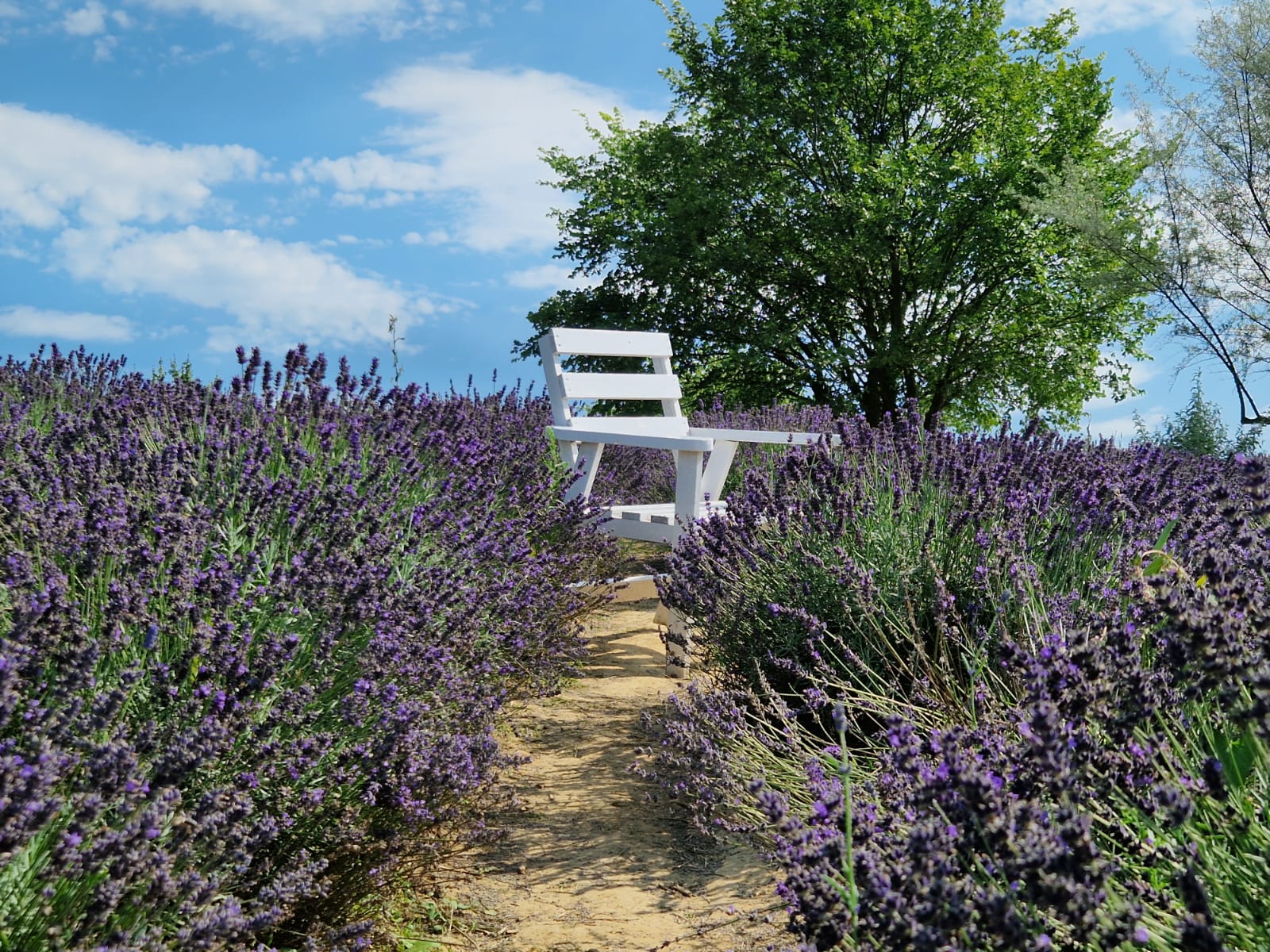
    Lavender may be strongly associated with the sun-drenched landscapes of Provence, but Poland has quietly developed its own lavender tradition. Across different parts of the country, growers have transformed patches of farmland and gardens into places where the purple flowers have become a seasonal attraction in their own right. When the plants reach full bloom, people begin planning weekend journeys around them. Families pack the car, couples search for a peaceful summer escape, photographers arrive with their cameras, and groups of friends come looking for the perfect backdrop for photographs. What was once primarily an agricultural crop has become part of a new kind of rural tourism — one based not on grand monuments or famous historical events, but on the simple beauty of a landscape that exists for only a short time each year.

    The attraction is immediately obvious when you arrive. Lavender fields have a visual quality that is difficult to reproduce anywhere else. The plants grow in long, orderly lines, creating a natural perspective that seems to draw the eye towards the far end of the field. On a sunny afternoon, the purple flowers appear almost luminous against the surrounding green vegetation. When the wind moves across the plants, the rows seem to ripple gently, while the constant activity of bees gives the landscape a sense of life. Visitors often arrive expecting to take a few photographs and leave, only to find themselves staying much longer than planned. There is something about the combination of colour, scent, sunshine and silence that encourages people to slow down.

    That sense of slowing down may be one of the most important reasons these places have become so popular. Modern travel often involves movement from one attraction to another: a historic square in the morning, a museum before lunch, a viewpoint in the afternoon and a restaurant in the evening. Lavender fields offer almost the opposite experience. There is no complicated itinerary and no long list of things to see. You walk, sit, look and breathe. Children can explore the paths, photographers can wait for the right light, and older visitors can simply enjoy the surroundings. The experience is uncomplicated, but that does not make it insignificant. In fact, its simplicity is part of what makes it memorable.

    For many Polish visitors, a trip to a lavender field also represents a different way of discovering their own country. Poland is often introduced through its historic cities — Kraków, Warsaw, Gdańsk, Wrocław or Poznań — or through its great natural landscapes, from the Baltic coast to the Masurian lakes and the Tatra Mountains. Yet between these famous destinations lies another Poland, made up of small villages, farms, gardens, forest roads and agricultural landscapes that rarely make the front page of a tourist guide. Lavender farms belong to this quieter world. They offer travellers a reason to leave the major tourist routes and discover places where the rhythm of the day is determined less by sightseeing schedules and more by the weather, the growing season and the work of the people who cultivate the land.

    The journey itself can therefore become part of the experience. A visitor may leave a busy city in the morning and, within an hour or two, find themselves travelling through a landscape of wheat fields, meadows, roadside trees and small villages. The roads become quieter. Buildings become less frequent. Eventually, the first signs of the lavender farm appear, and what began as an ordinary summer drive turns into something much more distinctive. This is one of the pleasures of travelling through rural Poland: beautiful places are often not announced by monumental entrances or enormous tourist signs. Sometimes you simply turn off a country road and discover that an entire hillside or field has been transformed by flowers.

    Some farms have developed the visitor experience even further, offering workshops, seasonal events, tastings, photography sessions and small cafés or refreshment areas. These additions have helped turn lavender cultivation into a form of agritourism, allowing visitors to connect the beauty of the landscape with the people who maintain it. This is important because the fields are not simply ornamental gardens created for tourists. They are working landscapes, and their appearance depends on agricultural knowledge and constant care. The spectacular few weeks of flowering that visitors see are the result of much more work throughout the rest of the year.

    The timing of a visit is therefore crucial. Lavender does not wait for the tourist season, and the exact moment of peak flowering can change from year to year depending on temperatures, rainfall and local conditions. For travellers, this creates a certain sense of urgency. Miss the season and the landscape will look completely different. Arrive at exactly the right time, however, and you may find the field at its most dramatic, with thousands of flowers in bloom and the air filled with their fragrance. It is one of those travel experiences that cannot be entirely controlled, which is perhaps another reason it feels special.

    Early morning is particularly beautiful. The crowds are smaller, the air is cooler and the light has a softness that disappears as the day becomes brighter. In some places, dew can still be visible on the plants, while the surrounding countryside remains quiet. Later in the day, the atmosphere changes. Families arrive, photographers position themselves between the rows and the field becomes livelier. On a warm summer weekend, the same place that felt almost solitary at sunrise can become a gathering point for visitors from several different parts of Poland.

    You don’t need to travel to Provence to walk among purple fields. Every summer, the countryside around Kraków turns into a fragrant landscape of lavender, drawing photographers, families and travelers looking for a slower kind of escape.

    For a few weeks each summer, parts of Małopolska seem to change color.

    The green countryside around Kraków gives way to rows of violet and purple, and the air carries the unmistakable scent of lavender. What was once primarily an agricultural crop has become one of the region’s most charming seasonal attractions.

    Lavender generally blooms in Poland from mid-June through late July, although the exact timing depends on weather and location. The most spectacular period is usually during June and July, when the plants are in full bloom.

    And in Małopolska, there are several places where you can experience it.

    A little Provence near Kraków

    One of the best-known spots is Ogród Pełen Lawendy, or Garden Full of Lavender, in Ostrów near Proszowice.

    It is the kind of place that seems designed for a summer afternoon.

    Rows of lavender stretch across the countryside, while visitors come to wander among the plants, photograph the flowers and simply enjoy the scent. The regional tourism organization describes it as one of the most picturesque lavender destinations in Małopolska and notes that visitors can enjoy lavender ice cream, coffee, lemonade and cookies.

    It is easy to understand the appeal.

    You arrive expecting flowers.

    You discover an atmosphere.

    Where the hills become purple

    For something more dramatic, head toward the hills around Zakliczyn.

    Lavender Galicia spreads across approximately 60 acres near Zakliczyn, with rows of lavender set against the surrounding countryside. From the fields, the landscape opens toward the hills and the castle in Melsztyn, creating the sort of view that makes it difficult to believe you are still in southern Poland.

    The farm also hosts activities such as photography and painting workshops, as well as workshops connected with lavender products.

    This is perhaps where the experience becomes more than a flower field.

    It becomes a destination.

    Sunset at Witanowice

    Another beautiful option is Lavender on Nowy Świat in Witanowice.

    The attraction is smaller and more intimate, but its position gives it a special quality. The lavender grows alongside panoramic countryside views, and the regional tourism organization specifically highlights the sunsets here.

    If you are looking for photographs, late afternoon may be the moment to aim for.

    The light softens.

    The purple becomes warmer.

    And the countryside beyond the field begins to glow.

    A place for bees, flowers and slow travel

    At Lawendowe Zacisze in Fałkowice, lavender is part of a broader story about plants and bees.

    The farm covers around 15 acres and contains more than 2,500 lavender bushes of different varieties. It also has an apiary, with locally produced honey available to visitors, as well as workshops for people interested in herbs and natural products.

    There is something particularly appealing about places like this.

    The lavender isn’t simply there to be photographed.

    It is part of a working landscape.

    Bees move between the flowers, the scent fills the air and visitors are reminded that the beauty of a lavender field is also connected to agriculture and pollinators.

    Another field worth knowing

    If you are traveling around Małopolska and want something closer to Kraków, Lawendowa Sosnówka in Prandocin-Iły is another option.

    Lawendowa Sosnówka – pole lawendy is currently listed as open daily, with hours extending into the evening during the season.

    For visitors staying in Kraków, that makes a lavender-field excursion particularly easy to combine with a countryside drive.

    When should you go?

    Timing is everything.

    Lavender season is short, and a field can look dramatically different from one week to the next. In Małopolska, the general flowering season runs from mid-June to late July, but warmer weather can bring the flowers into bloom earlier.

    If your main goal is to see the fields at their most vibrant, check each farm’s social-media channels or website before setting out.

    And don’t assume that every field peaks at exactly the same time.

    The weather decides.

    Come for the color. Stay for the countryside.

    The lavender fields of Małopolska may not have the scale of Provence.

    That is part of their charm.

    Here, the experience feels closer to discovering a beautiful local secret: a small farm beyond the city, a hillside covered in purple, bees humming between the flowers and the smell of summer hanging in the air.

    For travelers based in Kraków, it is an easy way to escape the crowds without going far.

    And perhaps the best part is that you don’t need a special reason to visit.

    Go with a camera.

    Go with your family.

    Go for a quiet afternoon.

    Or simply go because, for a few precious weeks each year, Małopolska turns purple.

    Travel tip: Lavender is a seasonal attraction, so always check current bloom conditions before making the trip. The regional tourism authority recommends following individual farms for updates on flowering.

    For a nearby option, Lawendowa Sosnówka – pole lawendy is in Prandocin-Iły, while Lawendowe Pole Filipowice Jurajskie LawendLove offers another lavender-field experience in the Kraków-area countryside.

  • Bukowski Bears must be the cutest shop I ever stepped inside in Krakow Old Town

    There are shops in Kraków that you enter because you need something.

    And then there are shops you enter simply because you cannot resist.

    Bukowski Bears belongs firmly in the second category.

    Tucked into the busy streets of Kraków’s Old Town, this little shop has the kind of irresistible charm that can stop you in your tracks. You might be walking towards the Main Market Square, thinking about your next coffee or deciding which historic street to explore, when suddenly you notice them: rows of soft, beautifully dressed teddy bears looking out from the window.

    It is difficult not to smile.

    And even more difficult not to go inside.

    The moment you cross the doorway, Kraków’s grand architecture and busy tourist streets seem to disappear for a while. Instead, you find yourself surrounded by bears in tiny outfits, sitting patiently on shelves, leaning against one another and staring back with expressions that seem almost too serious for something so adorable.

    This is the sort of shop that makes grown adults behave like children.

    And there is absolutely nothing wrong with that.

    A Little World of Teddy Bears

    Bukowski Bears is part of the Swedish Bukowski Design AB brand, a company known for its soft toys and teddy bears. The brand has a long history of creating collectible teddy bears and other animals, with designs that often give each character its own personality and story.

    But in Kraków, it is the atmosphere of the shop that makes the experience particularly memorable.

    The shelves are crowded with bears of different sizes and personalities.

    Some look elegant.

    Some look mischievous.

    Some are dressed like tiny adventurers.

    Others seem ready for a formal dinner.

    There are bears that look as though they have stepped out of a children’s storybook and bears that would not look out of place sitting beside you in a Kraków café.

    You start by looking.

    Then you pick one up.

    Then another.

    And suddenly you are wondering whether you really need to bring a teddy bear home from Poland.

    The answer, of course, is yes.

    The Kind of Shop That Makes You Stop Walking

    Kraków’s Old Town is full of beautiful things.

    There are centuries-old churches, colourful façades, historic courtyards, elegant cafés and shops selling amber, ceramics and traditional Polish souvenirs.

    But the teddy bear shop has a completely different kind of appeal.

    It is not grand.

    It is not historic.

    It does not need to be.

    Its charm is immediate.

    Children notice it first, but adults are often the ones who spend the longest looking.

    There is something wonderfully nostalgic about a teddy bear.

    Most people remember having one.

    Perhaps it was a childhood companion that travelled everywhere with them. Perhaps it sat on a bed for years. Perhaps it was eventually packed away in a box and forgotten.

    Walking into Bukowski Bears can bring that memory back surprisingly quickly.

    The shop sells toys.

    But the feeling is nostalgia.

    More Than Just a Souvenir

    One of the reasons the bears make such appealing Kraków souvenirs is that they do not look like typical souvenirs.

    There is no enormous “KRAKÓW” printed across the front.

    No plastic keychain.

    No magnet shaped like a castle.

    Instead, you leave with a small character that happens to have been discovered in one of Europe’s most beautiful cities.

    Years later, you may not remember exactly which café you visited on your second afternoon in Kraków.

    But you might remember the bear sitting on a shelf at home.

    That is the difference between buying something because you are a tourist and finding something because it genuinely made you happy.

    The Bears Have Personalities

    The most charming detail is that many of the bears seem to have individual personalities.

    Some look shy.

    Others appear confident.

    There are serious bears, sleepy bears and bears who seem to have been waiting patiently for someone to take them home.

    Their clothing helps.

    A little jacket can transform a teddy bear completely.

    A hat gives another one a sense of character.

    A tiny scarf makes another look as though it is ready for a winter walk through Kraków.

    It is easy to begin inventing stories.

    This bear would live in a mountain cabin.

    That one would spend its afternoons reading.

    Another would probably enjoy a long Sunday lunch.

    The shop encourages exactly this kind of imagination.

    Why the Shop Feels So Different

    There is something comforting about entering a place where nothing is particularly complicated.

    You do not have to understand Polish history.

    You do not need to read museum labels.

    You do not need to know anything about art.

    You simply look at a room full of bears and decide which one makes you smile.

    In a city as historically rich as Kraków, that simplicity is refreshing.

    After spending the morning at Wawel Castle or walking through the Old Town’s medieval streets, a shop devoted almost entirely to teddy bears feels wonderfully unexpected.

    It is a reminder that travelling does not have to be serious all the time.

    A Surprise for Children—and Adults

    If you are travelling with children, Bukowski Bears is an easy win.

    The shop is small enough to explore without becoming overwhelming, but there is plenty to discover.

    Children can choose their favourite character.

    Parents can enjoy watching them make a decision that somehow becomes extremely important.

    And then comes the difficult part.

    Choosing just one.

    For adults travelling without children, the shop can be even more dangerous.

    There is something about seeing a beautifully made teddy bear in a tiny outfit that bypasses rational decision-making entirely.

    You tell yourself you are only looking.

    Five minutes later, you are carrying a bear towards the counter.

    The Perfect Rainy-Day Stop

    Kraków weather does not always cooperate with travel plans.

    A beautiful morning can become grey and rainy by lunchtime.

    That is when little discoveries like this become especially valuable.

    You can duck inside, escape the weather for a few minutes and find yourself somewhere completely different.

    The rain taps against the window.

    The streets outside become darker.

    Inside, the bears remain perfectly dry and cheerful.

    It is not a major attraction.

    It does not need to be.

    Travel is often made memorable by these small moments rather than the places you carefully planned to visit.

    A Shop That Makes You Smile

    Perhaps the best thing about Bukowski Bears is that it does not take itself too seriously.

    Kraków has enough grand attractions.

    It has castles and cathedrals.

    It has museums dedicated to centuries of history.

    It has monuments, churches and magnificent squares.

    But a city should also have places where you can simply smile.

    This is one of them.

    The bears are soft.

    The shop is charming.

    The characters are wonderfully expressive.

    And there is something almost universally appealing about finding a tiny companion in the middle of a historic European city.

    Take One Home

    If you are looking for a Kraków souvenir with a little more personality than the usual tourist trinket, this is the sort of place worth remembering.

    Choose a bear that reminds you of your trip.

    Perhaps one dressed for winter, to remind you of Kraków’s cold mornings.

    Perhaps a smaller one that fits easily into your luggage.

    Or perhaps the biggest, most ridiculous bear in the shop—the one you immediately fell in love with despite promising yourself that you would not buy anything.

    There are no rules.

    The best souvenirs rarely follow them.

    The Cutest Little Detour in Kraków

    The beauty of Kraków is that you can spend an entire day visiting places that have shaped Polish history and still stumble upon something completely unexpected.

    That is what makes the city so enjoyable.

    One moment you are standing beneath the towers of St Mary’s Basilica.

    The next, you are walking through a tiny shop surrounded by teddy bears.

    One moment you are thinking about medieval kings.

    The next, you are deciding whether a bear in a little coat can fit inside your suitcase.

    And somehow, both experiences belong to the same city.

    So if you find yourself wandering through Kraków’s Old Town and notice a window full of impossibly cute bears, stop.

    Go inside.

    Take your time.

    Pick one up.

    You may arrive as a curious traveller and leave with a new travel companion tucked under your arm.

    And honestly, there are worse things to bring home from Kraków.

    Because sometimes the memories that stay with us are not the grand ones.

    Sometimes they are soft, slightly ridiculous and unexpectedly sweet.

    Sometimes they are a teddy bear.

  • An Insider’s Guide to 5 of Poland’s Most Remarkable Mines

    Beneath Poland’s towns and forests lies another country—one of salt chambers, silver tunnels, coal workings and underground rivers. These five mines offer some of the most unusual travel experiences in Poland.

    Poland is a country that rewards looking twice.

    Above ground, there are medieval squares, Gothic churches, castles and Baltic beaches. But go below the surface and another side of the country appears: centuries of mining that helped build towns, fortunes and entire industrial regions.

    Today, some of Poland’s historic mines have become extraordinary tourist attractions. You can walk through enormous chambers carved from salt, travel by boat through underground passages or descend hundreds of meters into the world of coal mining.

    Here are five mines worth putting on your Polish travel list.

    1. Wieliczka Salt Mine — Poland’s Underground Masterpiece

    If you visit only one mine in Poland, make it Wieliczka.

    Just outside Kraków, the Wieliczka Salt Mine is one of the country’s most famous attractions and has been part of the UNESCO World Heritage List since 1978. The historic tourist route takes visitors through chambers and galleries deep beneath the ground, with spectacular chapels, sculptures and other works carved from salt.

    The scale is difficult to imagine until you are there.

    You descend beneath the surface and gradually leave the world above behind. Wooden staircases lead downward, corridors open into enormous chambers, and suddenly the mine feels less like a place of industry and more like an underground cathedral.

    The highlight for many visitors is St. Kinga’s Chapel, where salt sculptures and architectural details create one of the most remarkable spaces in the entire mine.

    Wieliczka is historic, theatrical and surprisingly beautiful.

    Best for: first-time visitors, architecture, history and unforgettable photographs.

    2. Bochnia Salt Mine — The Underground Adventure

    Not far from Kraków is another extraordinary salt mine: Bochnia.

    Salt has been extracted here since 1248, making Bochnia one of Europe’s oldest mining sites. Today, parts of the historic mine have been adapted for visitors, with underground routes, a multimedia exhibition, an underground train and even a boat ride.

    Compared with Wieliczka, Bochnia can feel more adventurous.

    The enormous Ważyn Chamber is one of the mine’s most memorable spaces, while St. Kinga’s Chapel reveals the religious traditions that developed around underground mining.

    There is also something appealing about the fact that Bochnia feels less like a grand monument and more like an exploration.

    You are not simply looking at history.

    You are moving through it.

    Best for: families, adventure seekers and travelers who want something beyond the classic Wieliczka experience.

    3. Tarnowskie Góry Silver Mine — Into Silesia’s Underground World

    For a completely different experience, head to Tarnowskie Góry in Upper Silesia.

    The Tarnowskie Góry Lead-Silver-Zinc Mine and its historic underground water-management system became a UNESCO World Heritage Site in 2017. The mining landscape developed over centuries, with underground workings, shafts, galleries and sophisticated systems designed to manage water.

    Today, visitors can explore a section of this enormous underground world.

    And then comes the unusual part: part of the tourist route is traveled by boat.

    It is an atmospheric experience—dark tunnels, underground water and the realization that generations of miners once worked in this hidden landscape.

    The mine also helps explain why Silesia looks the way it does today. Mining was not simply an occupation here; it shaped communities, technology and regional identity.

    Best for: industrial heritage, history and travelers who want something different from salt mines.

    4. Guido Coal Mine — The Deepest Kind of Experience

    If Wieliczka feels like an underground work of art, Guido Coal Mine in Zabrze feels like entering the industrial heart of Poland.

    Visitors descend to historic levels 170 and 320 meters underground, using an authentic mining elevator. At the deeper level, the route passes through genuine mining corridors and includes large machinery and a suspended electric railway.

    This is not a polished underground palace.

    It is rawer.

    The tunnels, machinery and atmosphere offer a glimpse into the physical reality of coal mining and the demanding conditions faced by generations of miners.

    For those who want an even more immersive experience, the mine also offers access to the 355-meter level, where visitors can take part in tasks inspired by the work of miners, under the supervision of a guide.

    There is even an underground pub at the 320-meter level.

    It is difficult to imagine a more unusual place for a drink.

    Best for: adventure, industrial history and anyone fascinated by what lies beneath Silesia.

    5. Kłodawa Salt Mine — A Different Kind of Underground Poland

    The final stop takes us to Kłodawa, home to one of Poland’s most distinctive salt mines.

    Unlike Wieliczka, where elaborate underground chambers and sculptures dominate the visitor experience, Kłodawa offers a more industrial encounter with salt mining.

    It is one of the historic mining attractions included in Poland’s national mining-heritage network, alongside Wieliczka, Bochnia, Tarnowskie Góry and Guido.

    The appeal here is the geology and the feeling of being inside a genuine mining landscape.

    It is a good choice for travelers who have already experienced Wieliczka and want to see another side of Poland’s salt-mining tradition.

    Best for: geology, mining enthusiasts and travelers looking for a less conventional attraction.

    Which mine should you visit?

    The answer depends on what kind of underground adventure you want.

    For your first trip to Poland: Wieliczka.

    For families and interactive experiences: Bochnia.

    For industrial history: Tarnowskie Góry.

    For a real sense of descending into a coal mine: Guido.

    For a different salt-mining experience: Kłodawa.

    Together, these mines tell a story that stretches far beyond the tunnels themselves.

    Salt helped finance medieval Poland. Silver and lead helped transform Silesia. Coal powered industry and shaped the identity of entire cities. The mines are therefore not isolated curiosities—they are pieces of the country’s economic, cultural and social history.

    And perhaps that is what makes them so compelling.

    Poland has plenty to see above ground.

    But some of its most fascinating stories are waiting hundreds of meters below it.

  • Inside Białowieża Forest: Europe’s Ancient Wilderness and a UNESCO World Heritage Site

    On Poland’s eastern edge, where the modern world gradually gives way to towering trees, fallen trunks and the sound of birds, Białowieża Forest offers a glimpse of the Europe that existed long before roads, cities and borders.

    There are forests that feel beautiful.

    And then there are forests that feel ancient.

    Białowieża is the latter.

    Straddling the border between Poland and Belarus, Białowieża Forest is one of Europe’s most important surviving tracts of old-growth and primeval forest. The UNESCO World Heritage property covers 141,885 hectares and protects a remarkable mosaic of lowland forests, wetlands and other habitats.

    It is not simply a place to go for a walk.

    It is a place to see what happens when a forest is allowed to follow its own rhythm.

    A forest from another Europe

    For centuries, much of Europe was covered by forests. Human settlement, agriculture, roads and cities gradually transformed that landscape.

    Białowieża is one of the rare places where fragments of that older world survive.

    Its trees include oak, ash, spruce, pine and other species, with some trees reaching extraordinary ages and sizes. But the real character of the forest comes from something less photogenic: what happens when trees die.

    A fallen trunk may remain on the forest floor.

    Branches decay.

    Fungi move in.

    Insects arrive.

    New plants grow around the remains.

    Instead of treating fallen wood as waste, the forest turns it into habitat. UNESCO specifically highlights the exceptional abundance of dead wood and the resulting diversity of fungi and saproxylic invertebrates.

    The forest is constantly dying and regenerating at the same time.

    That is what makes it feel alive.

    Where the European bison still roams

    Białowieża’s most famous resident is the European bison, or żubr.

    The animal has become a symbol of the forest and of European wildlife conservation. UNESCO identifies Białowieża as home to the largest population of the species within the World Heritage property.

    Seeing one in the wild is an entirely different experience from seeing a bison in a zoo.

    There is no guarantee.

    The forest is enormous, and the animals are free to disappear among the trees.

    That uncertainty is part of the attraction.

    You walk quietly, listening for movement. A branch breaks somewhere in the distance. Birds call overhead. Then, if fortune is on your side, a massive dark shape appears between the trunks.

    For a moment, the forest seems to belong entirely to the animal.

    More than bison

    The bison may be the star, but Białowieża’s importance lies in its extraordinary biodiversity.

    UNESCO records 59 mammal species, more than 250 bird species, 13 amphibian species, seven reptile species and more than 12,000 invertebrate species within the property. Wolves, lynx and otters are among the larger predators and mammals supported by the forest ecosystem.

    For birdwatchers, the forest can be particularly rewarding.

    For everyone else, the challenge is learning to look more carefully.

    A fallen tree might contain an entire miniature ecosystem. A hole in an old trunk can be evidence of a nesting bird. A quiet clearing may reveal tracks in the soil.

    Białowieża rewards patience rather than speed.

    The protected heart of the forest

    The Polish side includes Białowieża National Park, established in 1932 and covering more than 10,500 hectares. The park protects some of the forest’s most valuable natural areas.

    Białowieża’s protected landscape has an unusually long history.

    The forest survived in part because successive rulers protected it as a hunting ground. Over time, those layers of protection helped preserve an ecosystem that elsewhere in Europe had largely disappeared. UNESCO notes that the forest has survived in its natural state thanks to several ages of protection.

    That history is important.

    Białowieża is not untouched by humans in the absolute sense. People have lived around and interacted with the forest for centuries.

    Its importance is that large areas still retain ecological processes that have become exceptionally rare in Europe.

    A UNESCO forest

    Białowieża National Park was first inscribed on the UNESCO World Heritage List in 1979. The site was expanded to include the Belarusian part in 1992 and enlarged again in 2014, creating today’s transboundary World Heritage property.

    UNESCO recognizes the forest under two criteria: its outstanding example of Central European mixed-forest ecosystems and its exceptional importance for biodiversity conservation.

    That makes Białowieża more than a scenic destination.

    It is internationally recognized as a place of exceptional ecological value.

    The beauty of doing very little

    There is a temptation when visiting a famous natural attraction to look for a spectacular moment.

    A waterfall.

    A mountain.

    A rare animal.

    Białowieża works differently.

    Its drama is subtle.

    It is in the enormous trunk of an old oak. The green of moss after rain. A woodpecker somewhere above you. Mist between the trees in the morning. The sound of leaves moving when there is no one else on the path.

    And then there is silence.

    Real silence is increasingly difficult to find in Europe.

    Here, it can still be part of the experience.

    Why Białowieża belongs on a Polish itinerary

    Travelers often associate Poland with Kraków, Warsaw, Gdańsk or the Baltic coast.

    Białowieża offers another Poland entirely.

    This is the Poland of forests rather than medieval squares, of bison rather than monuments, of natural processes rather than human architecture.

    It also provides something increasingly rare in modern travel: the feeling that you have stepped into a landscape much older than yourself.

    You do not need to be an expert naturalist to appreciate it.

    You simply need time.

    Walk slowly. Look into the trees. Listen.

    The forest does not need to entertain you.

    It has been here long before us—and, if we protect it well, it may remain long after we are gone.

    Good to know: Białowieża Forest lies on the Poland–Belarus border, while Białowieża National Park is on the Polish side. Access rules vary by protected area, so visitors should check current regulations before entering restricted sections. The forest is a UNESCO World Heritage Site and one of Europe’s most important remaining areas of old-growth forest.

    For travelers: If you are looking for one place in Poland that combines wildlife, wilderness and history, Białowieża is difficult to beat. Come for the chance of seeing a European bison. Stay for the forest itself.

  • Why You Should Visit Poland’s Crooked Forest

    Why You Should Visit Poland’s Crooked Forest

    The Crooked Forest, also called „Fairy Tale Forest” by the residents, is located in Nowy Czarnów, four kilometers from Gryfino, near the Dolna Odra Power Plant. It is a cluster of over 100 uniquely curved pines growing in the area of 0.5 ha.
    The trees have been recognized as a natural monument and are under protection. The forest belongs administratively to the Gryfino Forestry Management – Pniewo Forest District.

    There are forests that make you feel small, forests that make you feel lost, and forests that seem to belong to another world entirely. In north-western Poland, near the village of Nowe Czarnowo, there is a small patch of woodland that creates a very different impression. The trees here do not rise straight towards the sky as you might expect. Instead, their trunks bend dramatically near the ground before curving upwards, creating a strange collection of shapes that has fascinated visitors for decades. Some lean in the same direction, others form almost perfect arches, and a few look as though an invisible force has pushed them sideways and then released them. This is Poland’s famous Crooked Forest, or Krzywy Las — a small and unusual place that has become one of the country’s most intriguing natural curiosities.

    The first thing to understand about the Crooked Forest is that it is not a vast wilderness. It is relatively small, and that can come as a surprise to people who have seen photographs of it online. The pictures, with their unusually curved trunks and mysterious atmosphere, can make the forest appear enormous. In reality, its fascination comes not from its size but from its strange concentration of similarly shaped trees. Walking among them is less like entering a huge forest and more like discovering an unusual outdoor puzzle. You find yourself looking from one trunk to another, wondering what happened to these trees and why they all seem to have experienced something similar.

    The trees are Scots pines, and their unusual shape is not a recent phenomenon. They were planted in the area before the Second World War, when this part of present-day Poland belonged to Germany. The trees were deliberately cultivated, but the precise reason for their distinctive curvature remains uncertain. That uncertainty is one of the main reasons the Crooked Forest has developed such a powerful reputation. There is no universally accepted explanation that completely resolves the mystery, and over the years several theories have circulated about how the trees acquired their remarkable shapes.

    One popular explanation is that the young trees were deliberately bent by people who wanted to use the curved trunks for practical purposes. In earlier times, naturally curved wood could be valuable for making particular parts of boats, furniture, sledges, carts and other objects. A tree that already had the right shape could save considerable work. According to this theory, the young pines were manipulated when they were still flexible, perhaps using tools or weights, and then allowed to continue growing upwards. The result would have been the dramatic curves that can still be seen today.

    It is an appealing explanation, partly because it gives the forest a human story. Instead of being simply an accident of nature, the trees would be evidence of a forgotten craft and an agricultural practice that disappeared with the people who created it. But the evidence is not conclusive. Other explanations have suggested snow damage, environmental conditions or some other event affecting the trees during their early growth. Over time, the Crooked Forest has therefore become a place where fact and speculation sit unusually close together.

    That mystery is precisely what makes a visit so enjoyable.

    If the cause were completely understood, the forest would still be unusual, but it might lose some of its imaginative power. Instead, visitors are left with a question. What happened here? Why do so many of the trees bend in such a similar way? Was it deliberate? Was it natural? Did someone shape them, or did the environment do something unexpected? Standing among the trees, it is almost impossible not to invent your own explanation.

    The visual effect is particularly striking because the surrounding forest contains plenty of ordinary, straight-growing trees. This makes the curved pines seem even more unusual. If every tree in the landscape were bent, the phenomenon would simply become the normal appearance of the woodland. Instead, the Crooked Forest stands out because of the contrast. Straight trunks surround the strange curves, making the unusual trees look almost as though they have been placed there deliberately.

    Walk closer and the shapes become even more remarkable. The trunks bend almost horizontally near the ground before turning upwards, creating forms that resemble hooks, question marks or enormous wooden parentheses. Some are so strongly curved that you may find yourself wondering how the trees managed to survive. Yet they did. The trees continued growing, year after year, carrying their unusual shapes into maturity.

    There is something deeply satisfying about seeing this in person because photographs can only communicate part of the experience. On a screen, a crooked tree is simply an image. In the forest, you can walk around it and see the curve from different angles. You can touch the rough bark, look up at the point where the trunk begins to straighten and compare it with the trees beside it. The scale becomes clearer. You realise that these are not small decorative plants but mature trees that have carried their unusual forms for decades.

    The surrounding landscape also matters. The Crooked Forest is located in the West Pomeranian region, an area known for its forests, lakes, rivers and relatively quiet rural landscapes. It is far removed from the crowded historic centres that dominate Poland’s tourism industry. There are no medieval market squares here, no grand palace rising above the skyline and no long line of souvenir shops surrounding the attraction. The appeal is much simpler: a patch of woodland containing one of the country’s most curious natural sights.

    That makes the Crooked Forest especially attractive to travellers who enjoy places that feel slightly off the beaten track.

    Poland has no shortage of famous destinations. Kraków has Wawel and its medieval Old Town. Warsaw has its reconstructed historic centre and museums. Gdańsk has its waterfront and extraordinary architecture. The Tatra Mountains attract hikers from across Europe. But alongside these well-known places is another Poland, one filled with strange geological formations, abandoned industrial sites, quiet villages and small natural attractions that rarely appear on an international itinerary.

    The Crooked Forest belongs to that Poland.

    It is the kind of place that can turn an ordinary road trip into a story worth telling.

    You may forget the name of every restaurant you visited during a holiday. You may struggle to remember the exact details of a museum exhibition. But you are unlikely to forget walking among a group of trees that all appear to have been bent by the same invisible hand.

    There is also a lesson in the forest about how easily nature can become part of local identity. The trees themselves are relatively ordinary Scots pines. What makes them extraordinary is their form and the unanswered question surrounding it. Over time, that curiosity has given the area a reputation far beyond its physical size. The forest has appeared in travel articles, photographs and social media posts, and it has become one of those places people mention when discussing Poland’s strangest attractions.

    Yet visitors should not expect a theme park or a heavily commercialised tourist attraction. The Crooked Forest is best approached as a natural curiosity. The experience is quiet. You walk, observe and wonder. That simplicity is important because it allows the trees to remain the centre of attention.

    If you visit, take your time.

    Do not simply photograph the first crooked tree you see and leave. Walk through the area and look at the different shapes. Notice where the curves begin and how the trunks eventually grow upwards. Look at the surrounding straight trees. Think about the competing theories. Then step back and look at the group as a whole.

    The more closely you observe them, the stranger they become.

    The forest also raises a broader question about our relationship with nature. We often divide landscapes into two categories: natural and human-made. But the Crooked Forest seems to occupy an uncertain space between them. If the trees were deliberately shaped by people, then the forest is a product of human intervention. If environmental forces created their forms, then it is an extraordinary example of nature producing something that looks almost artificial.

    Perhaps that ambiguity is part of the reason people find it so fascinating.

    Humans are naturally drawn to patterns, and the Crooked Forest contains one that demands an explanation. The trees are not randomly strange. Their curves repeat. They resemble one another. That apparent pattern suggests intention, even when we do not know whether intention was actually involved.

    For photographers, the forest offers another kind of attraction. The curved trunks create unusual compositions, particularly when viewed at ground level. In soft morning light, the shapes can appear almost sculptural. During autumn, when the surrounding foliage changes colour, the contrast between the trees and their environment becomes even more striking. Winter brings a different mood, with bare branches and low light emphasising the strange geometry of the trunks.

    But this is not a place that needs dramatic weather to be interesting.

    Even on an ordinary afternoon, the trees are enough.

    One of the pleasures of visiting unusual places is that they often challenge our expectations. We arrive imagining something spectacular on a grand scale and discover instead something small but unforgettable. The Crooked Forest works precisely this way. It does not overwhelm you with size. It catches your attention through detail.

    And perhaps that is a useful way to think about travel in Poland more generally.

    Some of the country’s most memorable experiences are not necessarily its largest attractions. A tiny village church can be more moving than a monumental building. A quiet lakeshore can stay with you longer than a crowded viewpoint. A forest containing a few hundred unusually shaped trees can become more memorable than a much larger national park simply because it gives you a question you cannot answer.

    The Crooked Forest is a reminder that curiosity can be a destination in itself.

    You do not need to know exactly what happened to the trees before visiting. In fact, it may be better if you do not. Arrive with the mystery intact. Walk among the pines. Examine their shapes. Read about the theories afterwards. Compare the evidence. Decide which explanation seems most convincing to you.

    And then accept that the forest may never give you a definitive answer.

    That is perfectly fine.

    Not every place needs to be completely explained in order to be understood. Sometimes a landscape becomes memorable precisely because it leaves something unresolved.

    The Crooked Forest is small, unusual and perhaps a little mysterious, but it represents something much larger about travelling through Poland. Beyond the famous castles and historic cities, the country is full of places that reward curiosity. Some are hidden in forests, others in small villages or beside quiet country roads. They may not have the fame of Kraków or Gdańsk, but they offer something equally valuable: the feeling that you have discovered something.

    And that is ultimately why the Crooked Forest deserves a place on a Polish travel itinerary.

    Come for the strange photographs, certainly. Come because you want to see one of Poland’s most unusual landscapes with your own eyes. But stay long enough to look carefully at the trees and ask yourself the question that has fascinated visitors for generations.

    Who — or what — bent the forest?

    Perhaps one day we will know for certain.

    Until then, the trees keep growing, silently holding their secret.

  • Oceanarium Międzyzdroje Is a Great Experience—Even If You’re Not a Marine-Life Lover

    You don’t have to be fascinated by sharks or coral reefs to enjoy this underwater world on Poland’s Baltic coast. Sometimes all it takes is seeing the ocean from a different perspective.

    Międzyzdroje is best known for its Baltic beach, wooden pier and long promenade, where summer visitors come for sea air, ice cream and sunsets.

    But just a short walk from the waterfront, another world is waiting indoors.

    At Oceanarium Międzyzdroje, the sea is brought inside—not as a distant horizon, but as something you can watch moving, circling and gliding only a few meters away.

    The attraction occupies around 3,000 square meters and contains tanks holding a combined 220 tons of water. Its collection includes marine and freshwater species from different parts of the world, from sharks and moray eels to colorful reef fish, sturgeons and arapaima.

    It is the sort of place that works even if your idea of marine biology begins and ends with knowing that fish live underwater.

    The moment the city disappears

    The most memorable part of the experience comes underground.

    On level -1, visitors encounter a 16-meter-long half-tunnel, surrounded by water and fish. Rather than looking down into an aquarium from above, you find yourself surrounded by the underwater world.

    It changes the feeling completely.

    A fish passes overhead.

    Another disappears into the blue.

    For a moment, the usual distance between visitor and aquarium seems to vanish.

    You are not standing at the edge of the sea, but the effect is surprisingly similar: the underwater world feels larger than you are.

    And this is where Oceanarium Międzyzdroje becomes more than an attraction for dedicated aquarium enthusiasts.

    From sharks to reef fish

    Sharks are inevitably among the biggest draws.

    But they are only part of the story.

    The oceanarium presents predatory species such as sharks and moray eels alongside brightly colored reef inhabitants, including clownfish, triggerfish and angelfish. Its freshwater collection includes species such as sturgeons, peacock cichlids and the enormous arapaima.

    The variety is important because it prevents the visit from becoming a single-animal spectacle.

    Instead, you move between very different underwater environments.

    One tank might feel almost theatrical, filled with vivid tropical colors. Another is quieter, with large freshwater fish moving slowly through the water.

    The further you look, the more there is to notice.

    An experience for children—and adults

    Oceanariums can sometimes feel designed primarily for children.

    Here, the younger visitors certainly have plenty to keep them occupied. The facility includes an educational and multimedia room, a playroom, interactive games using motion-detection technology and a life-size shark exhibition.

    But adults have reasons to linger too.

    There is something inherently calming about watching fish move through water.

    The pace is slower than the world outside. Visitors sit and watch. Children point at animals. Adults often end up doing exactly the same thing.

    And perhaps that is the appeal: you don’t need specialist knowledge to be fascinated by movement, color and scale.

    You can get closer than expected

    One of the more unusual features is the touch pool, where visitors can touch live fish under controlled conditions.

    It adds a tactile element to an experience that is usually entirely visual.

    For children especially, that can turn an abstract lesson about marine life into something tangible.

    Elsewhere, a paludarium with Japanese koi adds another dimension to the collection, reinforcing the idea that the aquatic world is much broader than the classic image of a coral reef.

    A good escape from the Baltic weather

    There is also a practical reason to keep Oceanarium Międzyzdroje in mind.

    The Baltic coast is beautiful, but it does not guarantee sunshine.

    When the weather turns cold or rainy, the oceanarium offers an easy indoor alternative to a beach walk. And because it is right in Międzyzdroje, it can be combined naturally with a day around the promenade, pier and other attractions.

    The building has three levels, with aquarium displays, places to rest, a café, a gift shop and children’s facilities.

    So you don’t have to treat it as a major expedition.

    It can simply become part of a coastal day.

    Why you don’t need to be a marine-life enthusiast

    Perhaps the best way to think about Oceanarium Międzyzdroje is not as a museum for people who already love fish.

    It is an introduction.

    You come in because you’re curious about the sharks.

    Then you notice the colors of the reef fish.

    Then you find yourself watching an enormous freshwater fish move slowly through the water.

    Then you sit in the half-tunnel and look up.

    That progression—from curiosity to attention—is what makes the experience work.

    The oceanarium takes something that can feel remote and inaccessible—the underwater world—and makes it visible at human scale.

    You don’t have to know the names of the species.

    You don’t have to be a diver.

    You don’t even have to be particularly interested in marine biology.

    You simply have to stop for a moment and watch.

    The Baltic has another side

    Międzyzdroje is a seaside resort, but the oceanarium offers a reminder that the sea is more than a place for swimming.

    Behind the beach is a vast world of ecosystems, predators, reef fish and freshwater species that most visitors will never encounter in their natural environments.

    That is ultimately what makes the visit worthwhile.

    The beach gives you the Baltic as landscape.

    The oceanarium gives you a glimpse of the underwater world as life.

    And after an hour spent watching fish move silently through blue water, you may find yourself looking at the sea outside with slightly different eyes.

    Practical details: Oceanarium Międzyzdroje is at Bohaterów Warszawy 16B. The official site currently lists admission at 90 PLN for adults, 70 PLN for concession tickets, and free admission for children under two. It also welcomes well-behaved dogs. Opening hours can change, so check before visiting.

    Oceanarium Międzyzdroje

    Official Oceanarium Międzyzdroje website

    If you’re visiting the Polish Baltic coast, this is one of those stops that is easy to underestimate. You may arrive expecting a quick look at some fish. You may leave having spent much longer than planned watching another world move around you.