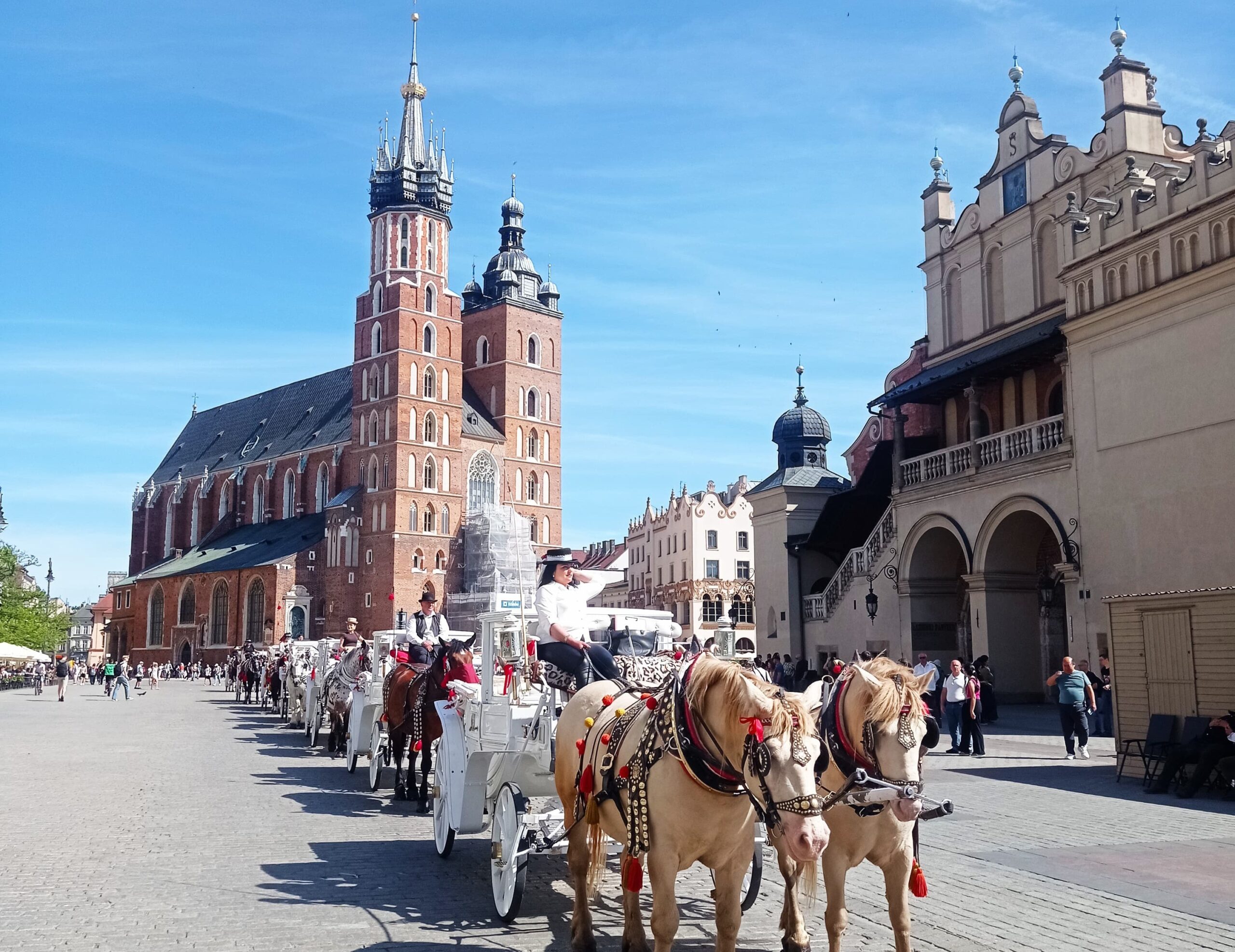
There are cities you visit for the monuments, cities you visit for the museums, and then there are cities where food becomes part of the reason you want to return. Kraków belongs firmly in the last category. Its historic centre may draw visitors with Wawel Castle, the towers of St Mary’s Basilica and the narrow streets of the Old Town, but after a few days here, it is often the meals that stay in your memory.
A bowl of steaming żurek on a cold evening. Pierogi arriving at the table in a cloud of heat. A plate of crispy duck served in a room filled with the atmosphere of an old Kraków townhouse. A long dinner in Kazimierz, when the conversation continues long after the plates have been cleared. The city’s food scene is no longer limited to the heavy, comforting dishes traditionally associated with Polish cuisine. Alongside old recipes, a younger generation of chefs is reinterpreting Polish ingredients, bringing seasonal produce, modern techniques and influences from elsewhere in Europe into the kitchens of Kraków.
That variety is what makes eating here so enjoyable. You can have a completely traditional Polish lunch without spending a fortune, then dress up for an elegant dinner that feels more like a special occasion. You can eat beneath the vaulted ceilings of a historic restaurant, sit at a lively table in Kazimierz or find yourself in a contemporary dining room where the menu changes with the seasons.
For travellers wondering where to begin, these are ten Kraków restaurants worth knowing about — not simply because of what is on the plate, but because each offers a different way of experiencing the city.
Czarna Kaczka: A Taste of Traditional Poland
Czarna Kaczka
Some restaurants feel as though they were designed specifically for visitors who have just arrived in Poland and want to understand what Polish cooking is really about. Czarna Kaczka, or “The Black Duck”, is one of them.
Located on Poselska Street, just a short walk from the Old Town, the restaurant focuses on Polish cuisine and has become known for hearty dishes that draw on familiar national traditions. It is the sort of place where dinner feels substantial rather than minimalist, and where traditional Polish flavours are allowed to take centre stage.
For a first meal in Kraków, that is exactly what many travellers are looking for.
Polish food is often misunderstood abroad as being simply heavy and filling, but a good Polish kitchen is much more interesting than that. Sourness, sweetness, smoked flavours, mushrooms, cabbage, potatoes, berries and herbs appear in different combinations, creating food that feels closely connected to the country’s landscape and seasons.
Czarna Kaczka is a good introduction to that world.
Come hungry, take your time and treat dinner as the beginning of your Polish food education rather than simply another meal between sightseeing stops.
Starka: The Warm, Old-Kraków Dinner
Restauracja Starka
Kazimierz has changed enormously over the past few decades, but there are still restaurants where the neighbourhood’s atmosphere feels inseparable from the meal.
Starka, on Józefa Street, is one of those places.
The restaurant serves Polish cuisine in an intimate setting, making it particularly appealing in the evening, when the streets of Kazimierz begin to glow under the old lamps and the neighbourhood takes on a slower rhythm.
This is the kind of restaurant where you should resist rushing.
Order something traditional. Try a Polish soup. Share pierogi. Leave room for dessert. If you have never tasted Polish cuisine beyond the occasional pierogi found elsewhere in Europe, this is the moment to discover how much more there is to it.
The appeal is not simply the food.
It is the whole evening.
Kazimierz is one of Kraków’s most atmospheric districts, and dinner here allows you to experience it at the right pace. You leave the restaurant and find yourself surrounded by old façades, small bars, cafés and streets that invite another walk before returning to the hotel.
Szara Gęś: Dinner on the Main Square
Szara Gęś w Kuchni
There are few restaurant locations in Kraków more dramatic than the Main Market Square.
At Szara Gęś, the setting becomes part of the experience. The restaurant occupies a historic address directly on Rynek Główny, placing you at the heart of the city while offering a more refined interpretation of Polish cuisine.
This is the restaurant to consider when dinner is meant to be an occasion.
Instead of looking for the cheapest meal near the main tourist sights, choose a table, settle in and watch Kraków move outside the windows. During the day, the square is filled with visitors, horse-drawn carriages and people crossing between the Cloth Hall and St Mary’s Basilica. In the evening, the atmosphere changes. The crowds thin, the historic façades become softer under the lights and the square begins to feel almost theatrical.
That is when a long dinner here makes sense.
The food is rooted in Polish traditions but presented with a more contemporary sensibility, making it a useful choice for travellers who want to experience Polish cuisine without necessarily choosing the most rustic version of it.
And sometimes the best souvenir from Kraków is not something you buy.
It is an evening you remember.
Pod Różą: An Elegant Kraków Classic
Restauracja Pod Różą
On Floriańska Street, one of the historic routes leading towards the Main Market Square, Pod Różą offers a very different kind of dining experience.
The restaurant is part of the Hotel Pod Różą, one of Kraków’s historic hotels, and its surroundings provide the kind of elegant setting that makes you want to slow down before the first course even arrives.
This is not the restaurant to choose when you want to eat quickly between Wawel and the Cloth Hall.
It is a place for an evening.
The menu is more refined, the atmosphere more formal and the experience better suited to a celebration, romantic dinner or final night in Kraków.
There is something particularly satisfying about eating in a historic city and choosing a restaurant that respects that history without turning it into a theatrical costume.
Kraków has spent centuries reinventing itself, and its best restaurants understand that tradition does not mean refusing to change.
Morskie Oko: The Mountain Spirit of Southern Poland
Morskie Oko
The name Morskie Oko will be familiar to anyone who has explored the Tatra Mountains. It is the name of one of Poland’s most famous mountain lakes, and the Kraków restaurant bearing that name embraces the atmosphere of the country’s southern highlands.
Inside, the restaurant evokes the traditional character of a mountain inn, creating a distinctly different mood from the elegant restaurants surrounding the Main Square.
The food follows the same direction, drawing attention to Polish and regional flavours.
For visitors who are not travelling onward to Zakopane or the Tatra Mountains, a meal here offers a small taste of that world.
Expect hearty food and the sort of portions that make sense after a day spent walking.
And if you have just returned from a long day exploring Kraków, that may be exactly what you want.
There is a particular comfort to sitting down in a warm restaurant in the evening with a substantial Polish meal in front of you. It is not sophisticated in the way fine dining is sophisticated.
It is something different.
It feels generous.
Kogel Mogel: Modern Kraków With Polish Roots
Restauracja Kogel Mogel
Kogel Mogel takes its name from a traditional Polish sweet made from egg yolks and sugar, but the restaurant itself is much more than a nostalgic reference to old Polish cooking.
Located on Sienna Street, close to the historic centre, it offers a more contemporary approach to Polish cuisine.
This is where travellers can begin to understand how Polish food has changed.
The ingredients may be familiar — meat, fish, vegetables, mushrooms, grains and seasonal produce — but the presentation and combinations are more modern. Instead of simply reproducing dishes exactly as they might have appeared decades ago, contemporary Polish restaurants are increasingly asking what those ingredients can become.
That evolution is one of the most exciting parts of Kraków’s food scene.
The city does not need to choose between its culinary past and its future.
It can have both.
A traditional pierogi shop can exist around the corner from a sophisticated tasting menu. A centuries-old recipe can inspire a modern dish. And visitors get to decide which version of Poland they want to discover.
Pod Aniołami: Dining Beneath the Old Town
Pod Aniołami
There is something wonderfully appropriate about eating traditional Polish food in the historic centre of Kraków.
Pod Aniołami, on Grodzka Street, embraces that feeling. The restaurant is associated with traditional Polish cooking and is located in a historic setting that adds considerably to the atmosphere.
Grodzka is one of the streets where Kraków’s history feels particularly close. It runs towards Wawel, passing churches and centuries-old buildings along the way.
A meal here can therefore become part of a larger evening.
Walk down Grodzka after sunset.
Look towards Wawel.
Stop for dinner.
Then continue through the Old Town while the crowds have begun to disappear.
The food itself is the main reason to come, but the setting reminds you that eating in Kraków is rarely just about the restaurant.
The city is always around you.
Qrudo Food & Wine: The Contemporary Side of Kazimierz
Qrudo Food & Wine
For travellers who want to see the more contemporary side of Kraków’s restaurant scene, Qrudo Food & Wine offers a different experience.
Located on Świętego Wawrzyńca in Kazimierz, the restaurant sits in one of the neighbourhood’s most energetic parts, where old industrial buildings, cafés, bars and restaurants have transformed the area into one of Kraków’s favourite places to spend an evening.
The food is modern European rather than strictly traditional Polish, making it a good choice when you have already eaten your way through pierogi, żurek and other classics and want something different.
That contrast is important.
A good food trip through Kraków should not be about eating the same three Polish dishes every day.
The city’s modern restaurants show how confidently Kraków has entered the wider European food scene. Local ingredients can sit comfortably alongside international techniques, and traditional flavours can appear in unexpected forms.
It is another reason to spend an evening in Kazimierz.
The neighbourhood has become one of the best places in the city to simply wander until you find somewhere that looks inviting.
Gościnna Chata: Rustic Polish Cooking
Restauracja Gościnna Chata – małopolska kuchnia regionalna
If your idea of Polish food involves rustic cooking, regional ingredients and generous portions, Gościnna Chata is the kind of restaurant to seek out.
On Sławkowska Street, close to the Old Town, it focuses on regional food from Małopolska, the region surrounding Kraków.
That regional connection matters.
Poland is not one single culinary tradition. Recipes and ingredients change from region to region, influenced by geography, history, climate and neighbouring cultures. Kraków sits in southern Poland, close to the Carpathians, and its food traditions naturally have their own character.
A restaurant such as this allows visitors to move beyond the generic idea of “Polish food” and discover something more local.
The atmosphere is deliberately rustic, making it a good option for travellers who want their dinner to feel connected to the countryside and regional traditions rather than contemporary city dining.
It is particularly appealing after a day spent exploring the Old Town, when what you want is something warm, familiar and unmistakably Polish.
Bottiglieria 1881: When Dinner Becomes an Event
Bottiglieria 1881
Then there are restaurants you visit not simply because you are hungry, but because you want to make an evening of it.
Bottiglieria 1881 in Kazimierz belongs in that category.
The restaurant has become one of the names associated with Kraków’s high-end dining scene, offering a sophisticated experience in the heart of the historic Jewish district.
Here, the meal is about more than ordering a main course.
It is about the rhythm of an evening: the setting, the service, the wine, the presentation and the succession of flavours.
For travellers who enjoy fine dining, this is where Kraków’s culinary identity becomes more ambitious. Polish ingredients can be treated with the same care and precision that you would expect in leading restaurants elsewhere in Europe.
It is also a reminder that Kraków’s food scene has matured considerably.
The city is no longer simply a destination for inexpensive traditional food.
It has become a place where serious cooking can stand alongside its historic architecture, museums and cultural attractions.
For a special occasion, this is the kind of dinner that can become one of the defining memories of the trip.
What Should You Eat in Kraków?
The best way to approach Kraków’s restaurants is to arrive curious.
Start with pierogi, of course. They are one of Poland’s most recognisable foods, but the variety is far greater than many visitors expect. They can be filled with potatoes and farmer’s cheese, meat, cabbage and mushrooms, seasonal vegetables or sweeter fillings.
Then try żurek, the distinctive sour rye soup that is one of Poland’s great comfort foods.
Look for dishes featuring mushrooms, which appear frequently in Polish cooking, especially in autumn. Try regional meats and hearty soups. Explore Polish cakes and pastries. And if you see something on a menu that you cannot pronounce, ask.
Sometimes the unfamiliar dish becomes the one you remember.
Kraków Is a City Best Experienced at the Table
The great pleasure of eating in Kraków is that food rarely feels separate from the rest of the city.
You might have lunch a few steps from the medieval Main Market Square, then spend the afternoon walking around Wawel. Later, you cross the Vistula or wander through Kazimierz as the lights come on, eventually finding yourself sitting at a wooden table with a plate of steaming Polish food in front of you.
The meal becomes part of the journey.
That is why the best restaurants in Kraków are not necessarily the ones with the most elaborate menus or the most expensive dining rooms.
Sometimes the restaurant you remember is the one where you ate after getting caught in the rain.
Sometimes it is the tiny place where you discovered your favourite pierogi.
Sometimes it is the elegant dinner you booked for your final night.
And sometimes it is simply the restaurant where you sat for two hours, talking about everything you had seen that day.
Kraków has enough restaurants to make every evening different.
So come hungry.
Order something you have never tried.
Stay a little longer than planned.
And let dinner become part of your Kraków story.